
Britain's Sewage Crisis: Why the Pipes Can't Cope
In the first five months of 2026, water companies in England and Wales recorded 7,280 dry-day sewage spills, close to the entire total for 2025. This video asks why a system built in Victorian London keeps dumping more sewage into rivers, not less.
It follows the Victorian combined sewer from Bazalgette's 1859-1875 intercepting network, built with 57 deliberate overflow points into the Thames, through the population growth, paving-over and heavier rainfall that have pushed that design past its limits. It covers the 1989 privatisation of the water industry, the gap between the roughly £78bn paid out in shareholder dividends and the sector's roughly £60bn in debt (University of Greenwich research), and the case of Thames Water, which carries debt close to £20bn and faces the prospect of a Special Administration Regime.
It compares Britain's combined-sewer legacy (about 70% of UK sewers) with countries that chose separated stormwater and sewage pipes, and covers the January 2026 white paper that abolishes Ofwat for a single new regulator, following the Cunliffe Review.
Every figure is on screen with its source and date.
In these topics
Chapters
- The toilet flush that goes two ways
- The Great Stink and Bazalgette's fix
- Why overflow was the plan, not a flaw
- From four million people to today's Britain
- What a spill actually looks like downstream
- 1989: selling the pipes
- Where the money went instead
- Thames Water on the brink
- The numbers get worse, not better
- How other countries built it differently
- Regulation torn up: Ofwat's abolition
- What forwards actually looks like
Video notes
1. The toilet flush that goes two ways
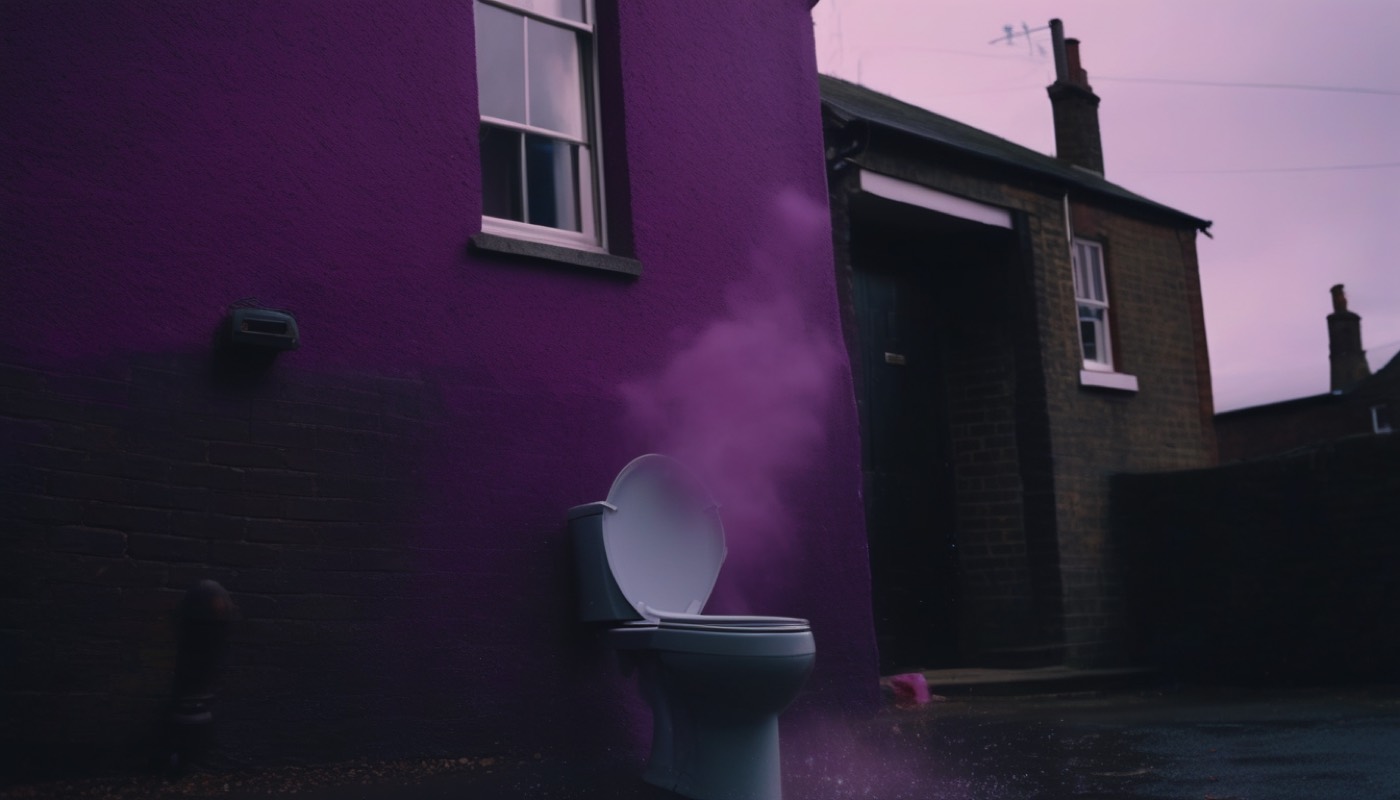
Flush a toilet almost anywhere in Britain, and the water does not travel alone. In most of the country it joins the rain running off your roof and your street, in the very same pipe, on the very same journey.
That shared pipe is called a combined sewer. It carries sewage, the waste from toilets, sinks and drains, together with surface water, the rain that runs off roofs and roads. One pipe, two jobs, all the way to the treatment works.
Most of the time that works fine. The problem starts when it rains hard.
When heavy rain floods into the system, the pipe can carry more than it was built for. Engineers gave it an escape route, called a combined sewer overflow, or CSO. Rather than let sewage back up into homes and streets, a CSO lets the excess spill into a river or the sea.
So the system was designed, from the start, to put some sewage into rivers on purpose.
This video follows that single idea from a Victorian safety valve to a modern crisis. It asks who built the system this way, who has paid for it since, and who decides what happens next.
A storm overflowing is one thing. An overflow on a dry day is another.
Early in twenty twenty-six, water companies in England and Wales recorded seven thousand two hundred and eighty dry-day spills, discharges on days with next to no rain to dilute them. That is already most of the eight thousand five hundred and seventy-six recorded across the whole of twenty twenty-five.
Set against the system's age, these figures are recent. Water was privatised in nineteen eighty-nine. The sharp rise in dry-day spills is recent too: twenty twenty-five into twenty twenty-six.
This video covers water companies across England and Wales, the two nations whose water and sewerage were privatised together in nineteen eighty-nine. Scotland and Northern Ireland run their water differently, and sit outside this story.
A dry-day spill is not the storm the system was built for. It is the system failing on an ordinary day. This video asks why that keeps happening, and whether Britain is moving forwards toward fixing it, or backwards toward more of it.
2. The Great Stink and Bazalgette's fix
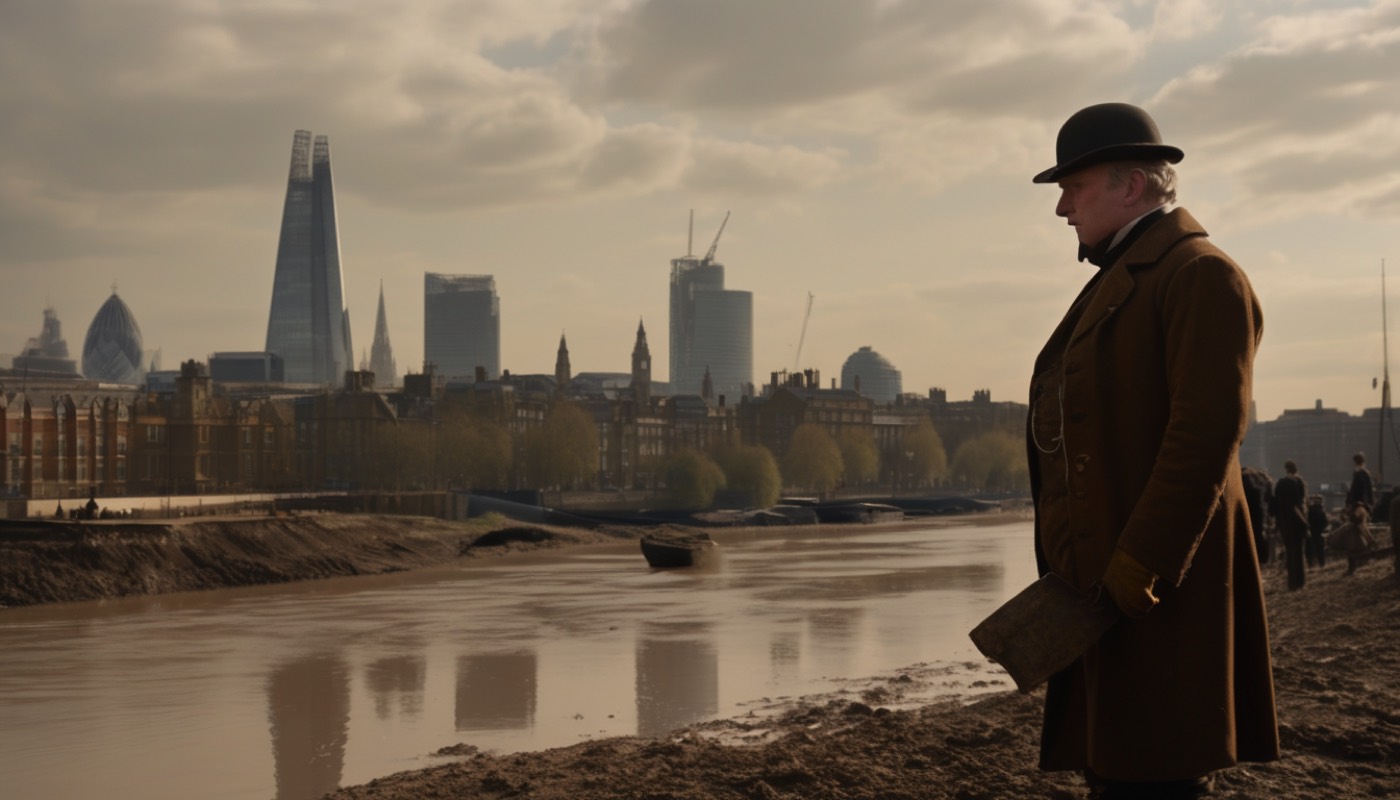
To understand why one pipe carries both sewage and rain, go back to the summer that forced Britain to build the pipe at all.
In the hot summer of eighteen fifty-eight, the River Thames through London had become an open sewer. The smell was so bad that Parliament, on its own riverbank, could barely sit. MPs called it the Great Stink, and it could no longer be ignored.
One description from Parliament survives, word for word.
The Chancellor of the Exchequer, Benjamin Disraeli, stood up in the House of Commons on the fifteenth of July eighteen fifty-eight and said what everyone could smell. "A Stygian pool, reeking with ineffable and intolerable horrors," he called the Thames. His words are still quoted today.
On a timeline, the pattern is clear. The Great Stink struck in eighteen fifty-eight, and construction began the following year. The whole network was finished in eighteen seventy-five.
Parliament, smelling the problem first-hand, moved with unusual speed.
Within weeks, Parliament gave the Metropolitan Board of Works the money and the legal power to build a sewer network for the whole of London. The job went to one engineer, and he had already been waiting years for the chance.
London got its Victorian sewer first, but the approach set the template for the rest of the United Kingdom. Most towns and cities across England and Wales built combined sewers of their own in the decades that followed.
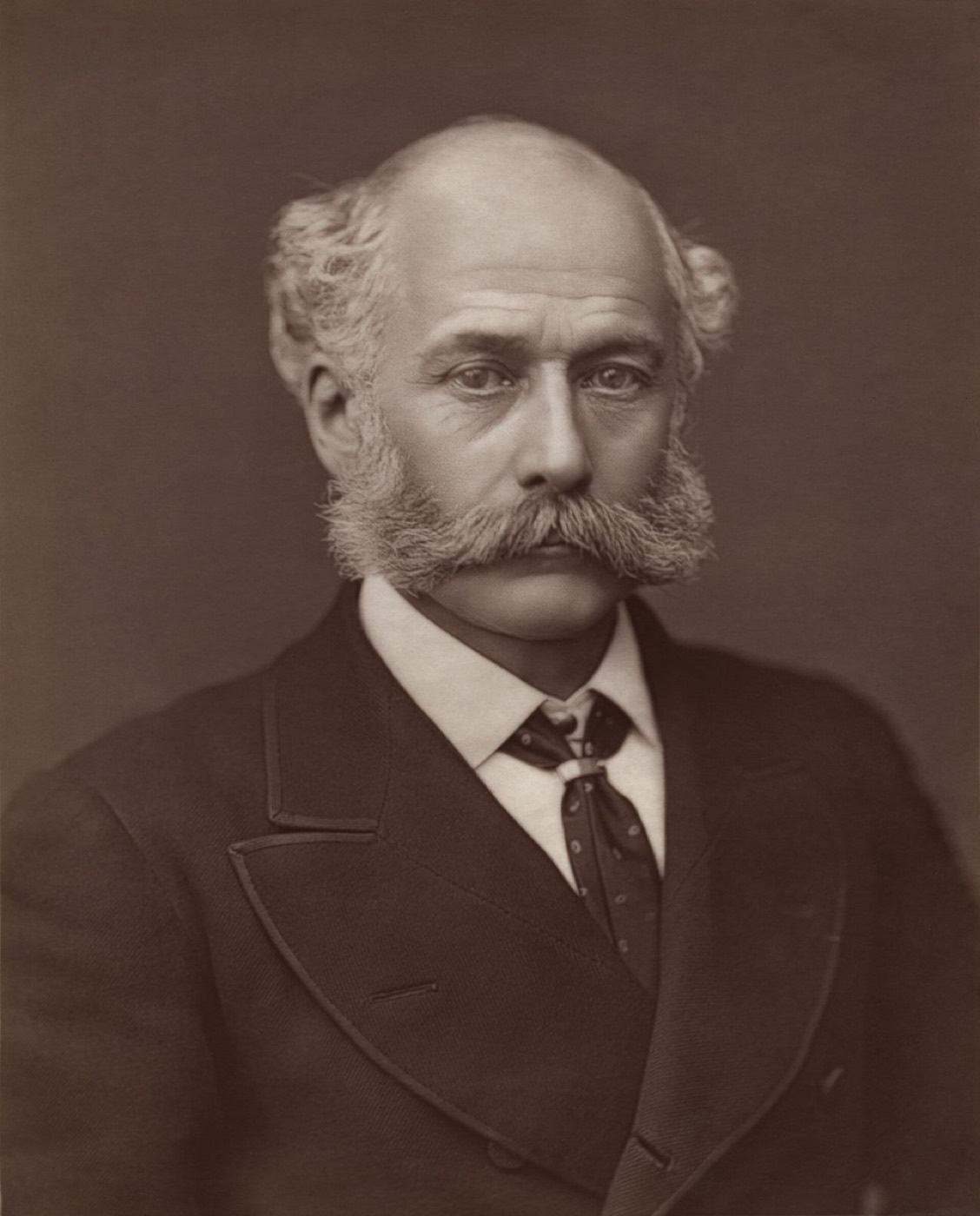
This is Sir Joseph Bazalgette, chief engineer of the Metropolitan Board of Works. Between eighteen fifty-nine and eighteen seventy-five, he built London's intercepting sewer network. It ran to about eighty-two miles of main brick tunnels, fed by over eleven hundred miles of street sewers.
Bazalgette's tunnels intercepted sewage that used to run straight into the Thames, and carried it east instead, away from central London. But even his new system needed somewhere for storms to go.
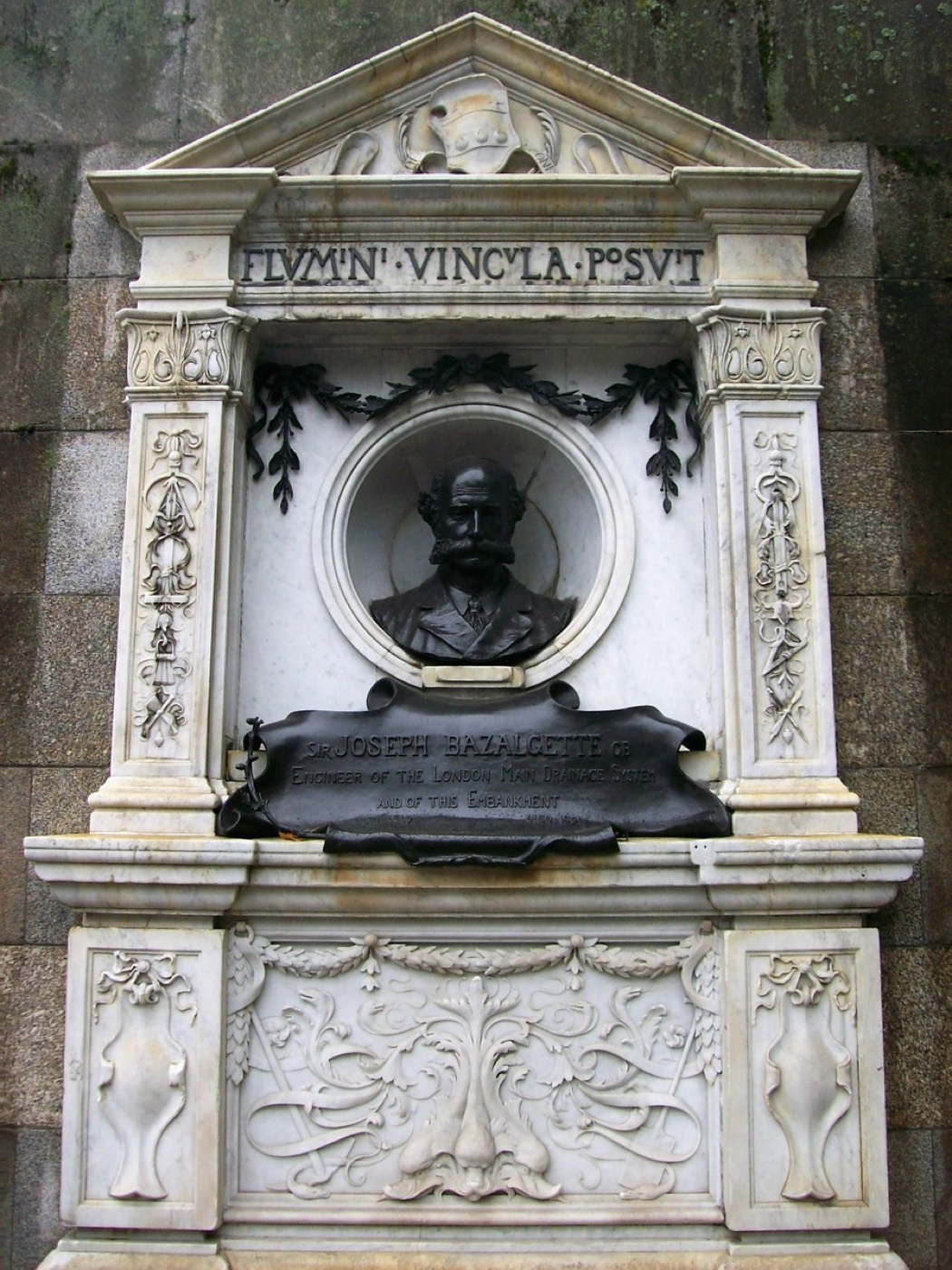
London still remembers him. This memorial to Bazalgette stands on the Victoria Embankment, built along the river as part of his scheme, hiding his great sewer beneath a new road and a public garden.
3. Why overflow was the plan, not a flaw
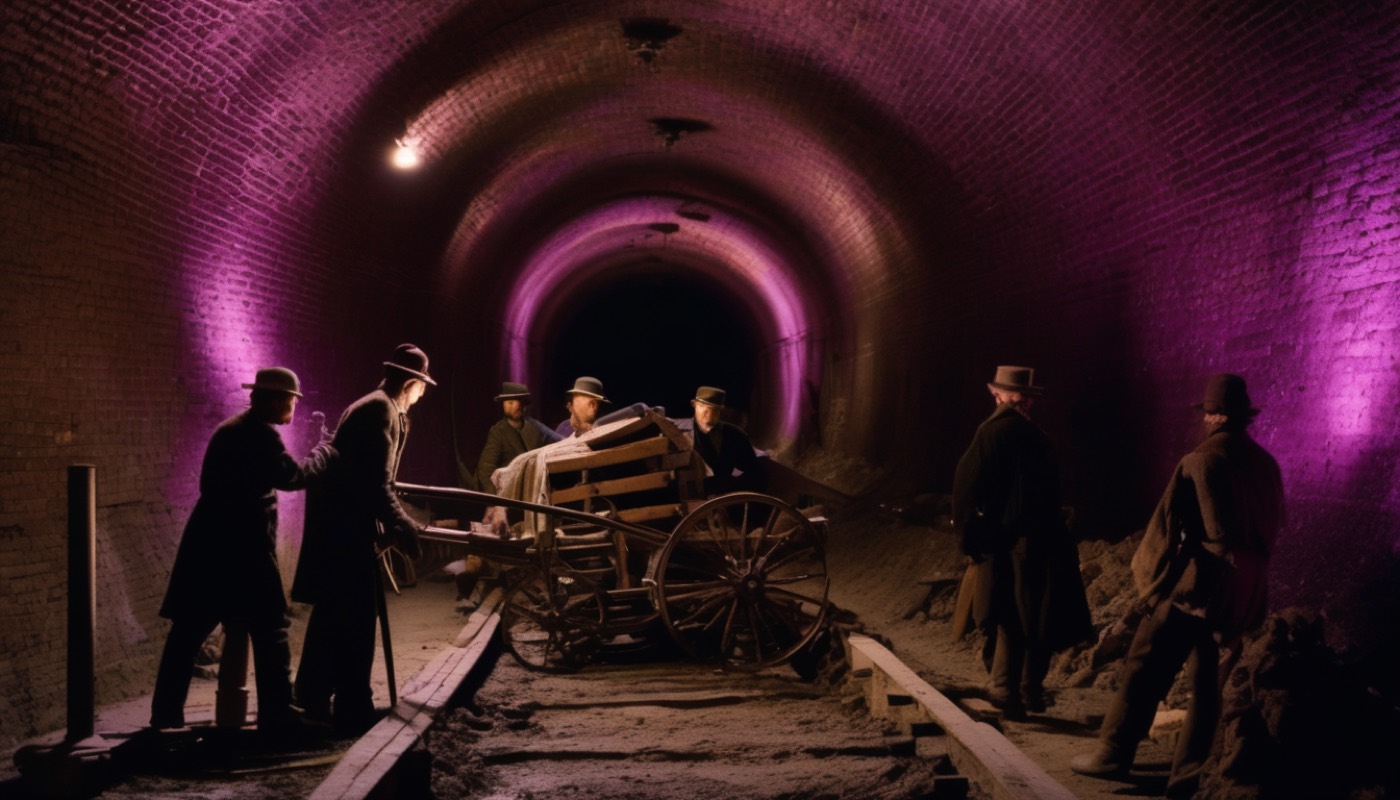
It would be easy to call a sewage overflow a design failure. Bazalgette's engineers would say it was the opposite: a deliberate safety valve, built in from day one.
Bazalgette's system used fifty-seven combined sewer overflows along the Thames. Each one let storm flow spill into the river rather than let it back up into the streets and homes above. The sewer was never meant to carry everything, all the time.
The logic rested on one assumption about the river itself.
The thinking was dilution. A big river like the Thames, the engineers reasoned, could absorb an occasional dose of diluted sewage and carry it away before it did lasting harm. The CSOs were a backup, meant to open rarely, in genuine storms.
That assumption held for a long time, because the system was built with room to spare.
Here is how the normal flow and the overflow work. In dry weather, everything goes to the treatment works. When a storm fills the pipe past its capacity, the CSO opens instead, and the excess spills to the river rather than flooding backward into streets and homes.
A safety valve that opens once in a generation is very different from one that opens every week.
The whole design rests on CSOs staying rare. Bazalgette's engineers sized the pipes, and the river's capacity to dilute what spilled, for the London and the climate they knew. Neither assumption was built to survive a much bigger city, or much heavier rain.
So a CSO opening in a real storm is the system doing exactly what Bazalgette intended. The question for the rest of this video is what happens when the overflow becomes the everyday, rather than the exception.
4. From four million people to today's Britain
Bazalgette built his network for Victorian London. Victorian London is not the Britain living on it today.
London's population was a little over four million when Bazalgette's sewers opened; by the twenty-twenties it had grown past nine million, more than double. That same growth carried the rest of the country upward too, from about twenty million people in England and Wales in the eighteen sixties toward about sixty million today.
More people means more flow in pipes that were never widened to match.
This growth was not confined to London. Towns and cities across England and Wales expanded over the same period, and built, or extended, combined sewers of their own.
Three forces have pushed the old system past its limit. More people means more sewage and more washing, cooking and flushing every day. More paved-over land means rain runs straight off roofs and drives, instead of soaking into soil. And heavier downpours arrive more often, because a warmer atmosphere holds more moisture and lets more of it go at once.
Paving over land is easy to miss, because it happens garden by garden, driveway by driveway.
A garden that used to soak up rain, turned into a paved driveway, sends that same rain straight into the drain instead. Multiply that by millions of gardens and driveways across a growing country, and a sewer built for open fields and soil is suddenly facing a city's worth of runoff.
That third force shows up in the infrastructure itself, old and new standing side by side.
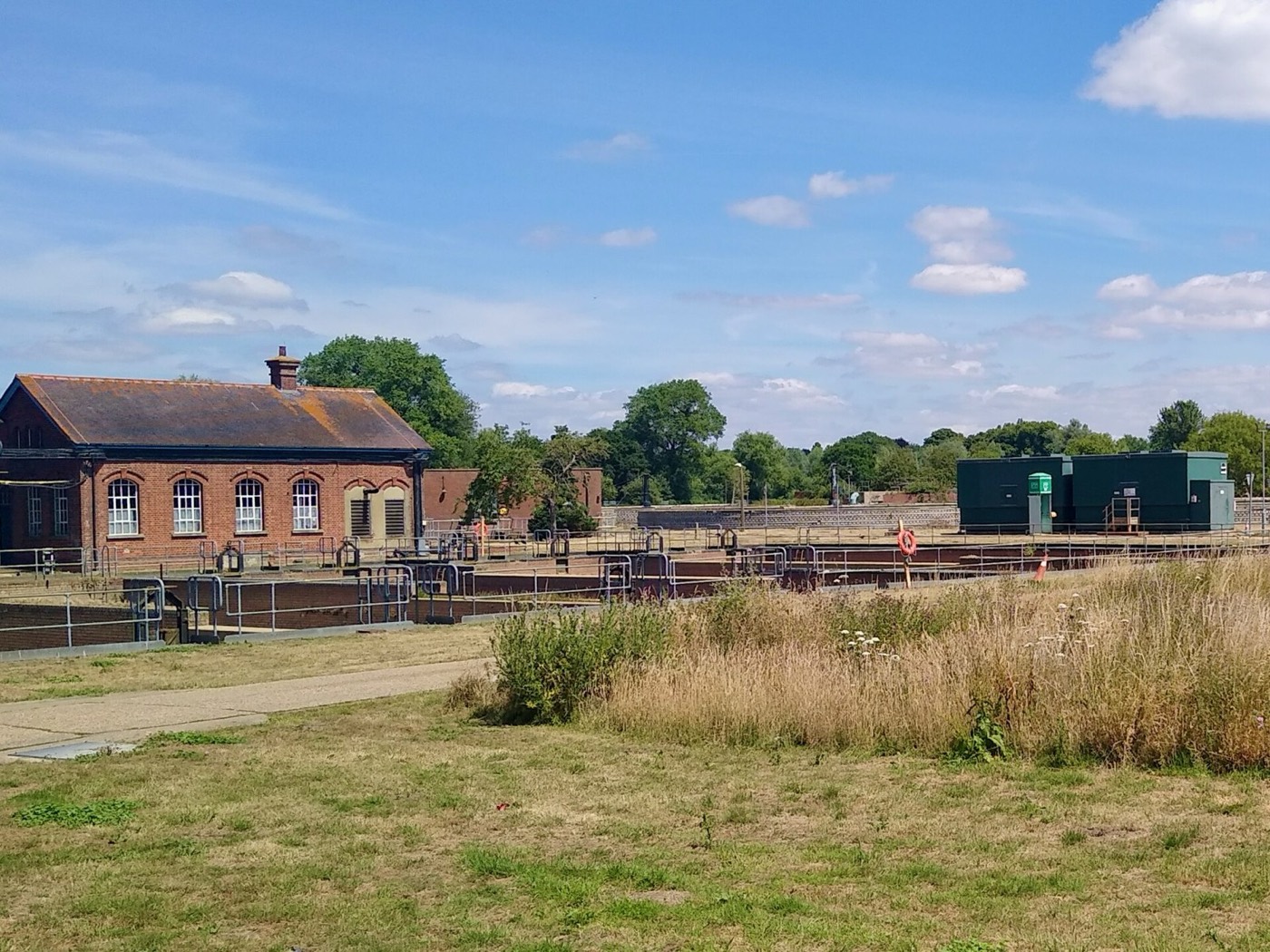
This is Woking Sewage Works, opened in eighteen ninety-six and still in use today, operated by Thames Water. Treatment works like this one have been expanded and modernised again and again. The pipes feeding them are, in many places, still the Victorian ones underneath the street.
A system built for four million people now serves a country many times that size, through pipes whose basic layout has not changed in a century and a half.
5. What a spill actually looks like downstream

All of this is abstract until a spill actually happens, somewhere real, to a river people use.
A spill does not end at the outfall pipe. Sewage carries nutrients and bacteria that feed algae, which can bloom across a river's surface. As the algae die and decompose, the process consumes the oxygen that fish and insects in the water need to survive.
So the harm spreads outward from the pipe, through the water, into the ecology that depends on it.
There is a direct human cost too. Rivers and coasts used for swimming, paddling and other water sports are classed as bathing waters. A sewage discharge nearby puts anyone in the water at risk of illness, from stomach upsets to more serious infections, until the water is tested safe again.
That risk is why some stretches of coast now carry real-time pollution alerts, warning people before they go in.
An alert works by flagging a recent spill or heavy rainfall near a bathing site, so people can choose to stay out of the water until it clears. It is a sign of the problem being managed, not solved: the spill still happened, the alert just tells people to keep away from it.
A single spill's effects usually fade within days or weeks, once the sewage disperses and oxygen levels recover.
The damage this video is tracking is not one spill. It is thousands of them, repeated on ordinary dry days, on rivers that never get the chance to fully recover between one discharge and the next. That repetition, not any single incident, is what turns a Victorian safety valve into an ongoing crisis.
6. 1989: selling the pipes

The system that overflows today was, for a century, publicly owned and run. That changed in one year.
In nineteen eighty-nine, the government of Margaret Thatcher privatised the water industry in England and Wales. Ten regional water authorities, responsible for both supplying drinking water and treating sewage, were sold to private shareholders in a single wave of sales.
The sale came with financial terms designed to make the new companies attractive to buy.
The sale covered England and Wales only. Scotland and Northern Ireland kept their water in public hands, a difference that still shapes the debate today.
Private investors paid about seven point six billion pounds for the ten water authorities. The government first wrote off around five billion pounds of the authorities' existing debt. It also handed the new companies a further one and a half billion pounds in cash.
That cash grant had a nickname that stuck.
The extra one and a half billion pounds was known as the "green dowry," a payment meant to help the new, private companies meet environmental standards from day one. So the companies began their private life with a clean balance sheet, public money in the bank, and a promise still to keep.
The promise behind privatisation was that private capital, and the discipline of private ownership, would fund the investment the Victorian pipes badly needed. Shareholders would take the risk, the argument went, and customers and rivers would see the benefit in cleaner water and fewer overflows.
Whether that promise was kept is the subject of the next two chapters.
7. Where the money went instead
Thirty-five years on, it is possible to compare what went out to shareholders against what the companies borrowed to stay afloat.
Research from the University of Greenwich, led by Professor David Hall, traces both figures since privatisation. English water companies have paid out about seventy-eight billion pounds in dividends to shareholders. Over the same period, the sector's debt has climbed to about sixty billion pounds.
Those two numbers sitting side by side are the heart of the complaint against the industry.
The debt did not mainly pay for new pipes and treatment works. Much of it, this research argues, was borrowed in order to keep paying dividends, even in years when the companies were not making that much in profit. The investment case for privatisation assumed shareholder risk; this pattern looks more like shareholder reward, funded by debt.
A company with more debt has less room to spend on upgrades, and more reason to keep bills as low as the regulator will allow.
Less room to spend shows up directly at the outfall pipe. Money that could repair an ageing sewer, or add capacity to a treatment works, instead services interest on debt that was borrowed years before any current customer's bill was paid.
None of this proves any single company broke a rule. Dividends and borrowing are both ordinary parts of running any utility.
The pattern holds across England and Wales as a whole, not just in one region. Companies from the South West to Yorkshire show the same shape: rising debt, steady dividends.
What the Greenwich research highlights is the scale and the pattern, repeated for over three decades. That pattern sets the scene for the single company whose finances became impossible to ignore.
8. Thames Water on the brink
No company shows the strain more starkly than the one serving London and the Thames Valley.
Thames Water, Britain's largest water company by customers, now carries debt close to twenty billion pounds. A rescue deal with the American private equity firm KKR collapsed, leaving the company searching for another way to avoid running out of cash.
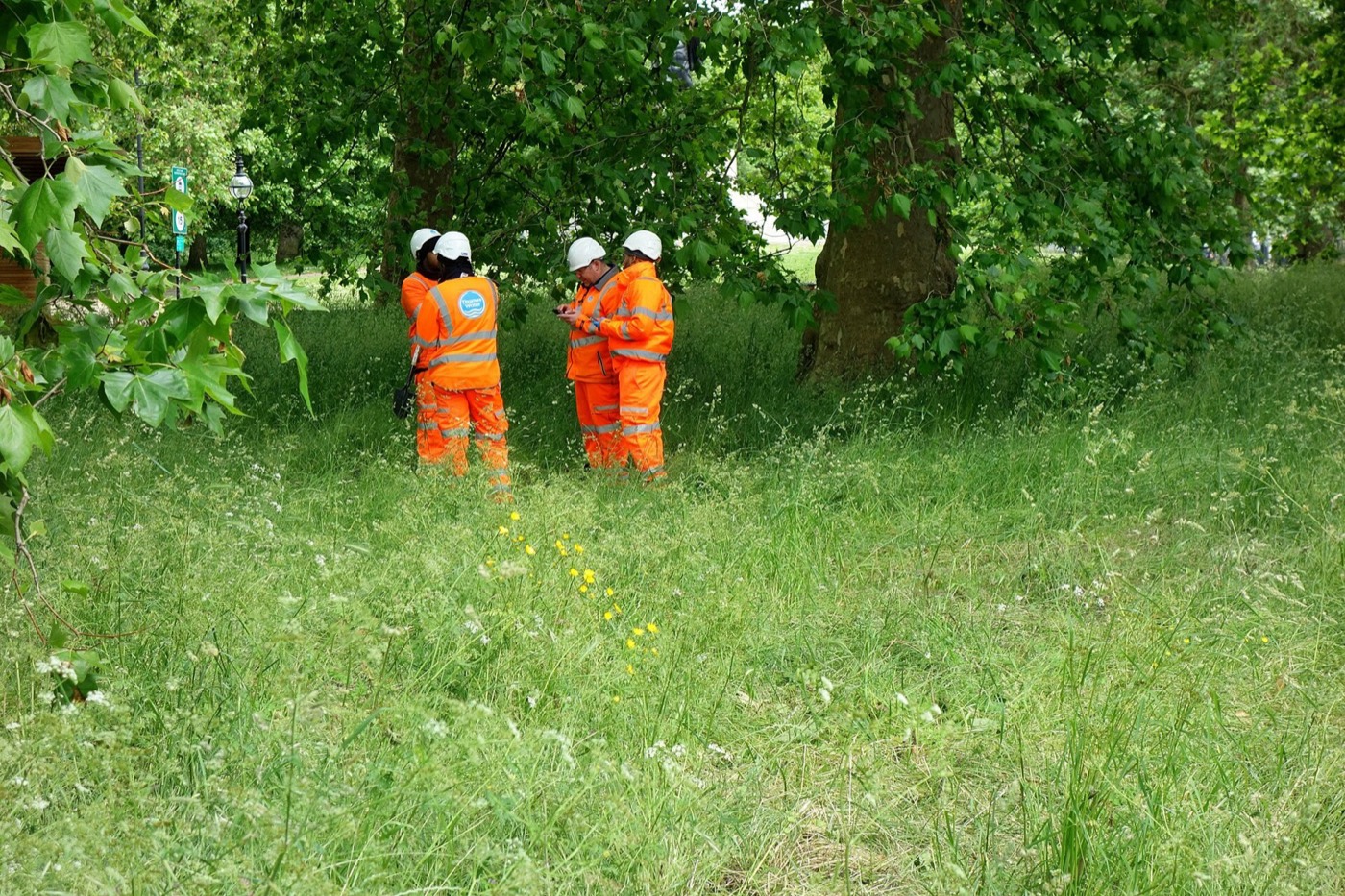
These are Thames Water engineers working in Hyde Park, London, keeping pipes and treatment works running day to day, whatever is happening in the boardroom.
Thames Water serves London and the wider Thames Valley, more customers than any other water company in the United Kingdom.
Its creditors offered a plan of their own, and the government pushed back.
In June twenty twenty-six, a group of Thames Water's creditors proposed injecting ten billion pounds into the company. In exchange, the regulator would have waived new fines over sewage leaks for several years. The government's environment secretary was not persuaded.
Her objection came in blunt terms: "I didn't want Thames Water's consumers to have to pick up the bill for their failures," Environment Secretary Emma Reynolds said, explaining why she would not wave the creditors' plan through unchanged.
With that plan in doubt, one option under active consideration is for the government to step in directly.
A Special Administration Regime, or SAR, is a legal process that lets the government take over an essential utility that cannot pay its way, keeping the taps running and the sewers working while new owners are found. As of this video, Thames Water has not been placed into one.
More than a hundred MPs have called for exactly that, without delay.
One 2024 estimate put the cost of an eighteen-month SAR to the taxpayer at around four billion pounds. Whichever way Thames Water's story ends, someone has to pay for thirty-five years of debt and dividends.
9. The numbers get worse, not better
Thames Water is one company's crisis. The dry-day spill data says the whole industry's numbers are moving the wrong way.
Across England and Wales, dry-day spills ran at a rate of forty-eight a day in early twenty twenty-six. Across the whole of twenty twenty-five, the rate was twenty-three and a half a day. The newer rate is more than double the older one.
That is not one company's bad year. It is spread across the country.
This is a pattern across England and Wales, not one region. Companies based in the Midlands, the South West, Yorkshire and London all appear in the same data.
Four companies led the dry-day spill count between January and May twenty twenty-six. Severn Trent topped the table, with South West Water, Yorkshire Water and Thames Water close behind it. These are not small regional operators.
Between them, these four companies alone serve tens of millions of customers.
A rising dry-day rate is a particular kind of bad news. Storm spills, however frequent, at least have an excuse built into the design. A dry-day spill has none: it happens with nothing to dilute it, and every available fix sits squarely within the company's own control.
So the trend line matters more than any single year's total.
If the system were being fixed, dry-day spills should be falling, year after year, as investment catches up with demand. Instead the rate roughly doubled in a single year. Whatever else has changed since privatisation, the pipes are not yet winning.
10. How other countries built it differently
Britain did not have to build its sewers this way, and not every country did.
About seventy per cent of sewers in the UK are combined systems, carrying sewage and rainwater together, just as Bazalgette designed. Belgium is in a similar position, at around the same share. Germany and France chose differently, each running a noticeably lower share of combined pipework.
The difference comes down to one engineering choice, made decades apart in different cities.
A separated system runs two pipes instead of one: a foul sewer for toilets and sinks, a storm drain for rainwater, each running straight to where it needs to go. Rain never mixes with sewage, so there is nothing for a storm to overflow into a river.
Paris shows how old that choice can be.
Paris began separating sewage from rainwater in major rebuilding works in the nineteenth century, around the same decades Bazalgette was building London's combined system. The two capitals, modernising their sewers at almost the same time, made different bets about how to handle a storm.
London and Paris, two capitals, two different pipes under their streets to this day.
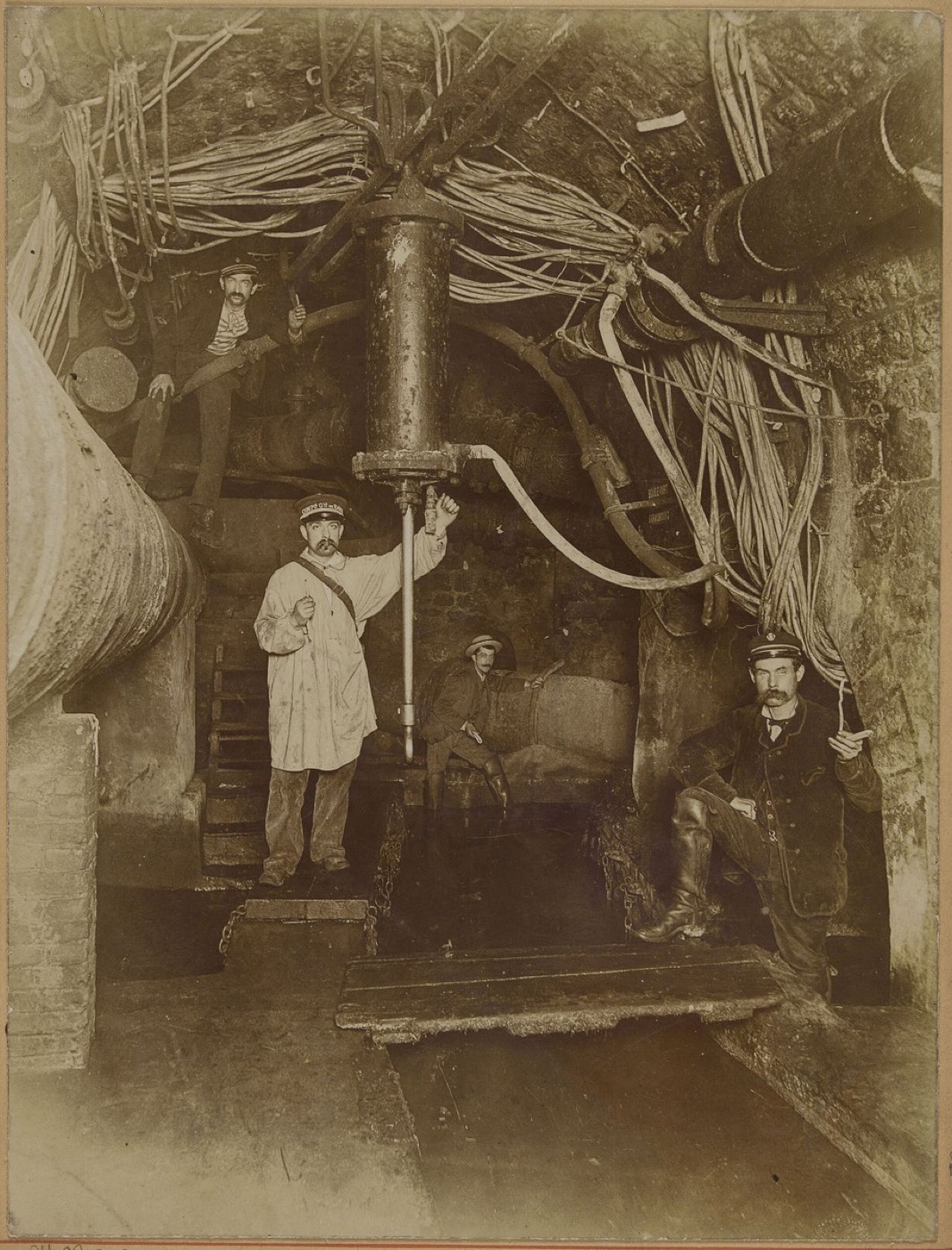
This is an archive photograph of the Paris sewer system from eighteen ninety-seven, built to the separated design the city chose in the nineteenth century. Walking tours still take visitors through parts of it today, a working system more than a century old.
Separation is not free, and it is not simple to retrofit into a city already built.
Digging a second pipe network under streets, buildings and existing utilities, in a city that already exists, costs vastly more than laying both pipes together in open ground. That is the trade-off: separation avoids the combined-overflow problem from the start, at a construction cost most Victorian cities, London included, never paid.
Seventy per cent of Britain's sewers are still combined, a century and a half after Bazalgette, because nobody has yet chosen to pay that cost at national scale.
11. Regulation torn up: Ofwat's abolition

While the pipes stayed much the same, the body that was meant to police them has just been rebuilt.
In July twenty twenty-five, the Independent Water Commission, led by Sir Jon Cunliffe, published a review of the whole regulatory system. Its central recommendation was blunt: abolish Ofwat, the economic regulator that had overseen water companies' prices and performance since privatisation.
The government's response came six months later.
In its white paper of January twenty twenty-six, titled A New Vision for Water, the government confirmed it would abolish Ofwat. In its place, a single new regulator will take over Ofwat's economic duties, along with water-quality functions currently split between the Environment Agency, the Drinking Water Inspectorate and Natural England.
One regulator, rather than several, is meant to close the gaps companies could previously fall between.
The case for a single regulator is simple. No single watchdog, under the old system, owned the whole problem. One body set prices, another checked pollution, and a third checked drinking water, so a failure that crossed those lines could be nobody's clear responsibility.
Combining them is meant to make failure harder to pass off as someone else's job.
A regulator's powers only matter if it uses them. The new body inherits the same pipes, the same debts and the same spill figures that Ofwat oversaw for over three decades, under a different name and a wider remit.
Whether a new name on the regulator's door changes what happens at the outfall pipe is something only time, and the next set of spill figures, will show.
12. What forwards actually looks like
Everything in this video points to the same question. What, realistically, happens next?
Three broad paths sit in front of Britain's water industry. Full nationalisation would bring the companies back into public ownership, as they were before nineteen eighty-nine. Continued private ownership, under the tougher single regulator, would keep today's structure but try to close the gaps the Cunliffe Review found. And physically separating storm water from sewage, pipe by pipe, city by city, would remove the overflow problem at its root.
Each path carries a cost that somebody has to pay.
Every path runs through London and the rest of the United Kingdom alike. Whatever is decided will apply nationally, not just to one city or one river.
Set side by side, the distance is stark. Nineteen eighty-nine was when the water industry was sold. Twenty twenty-six is when a single company can still come close to collapse under the debt that followed.
Nationalisation would require the government to buy out existing shareholders and take on the sector's debt directly, a bill that would land on taxpayers rather than water bills. Reformed private ownership keeps the debt with the companies, but depends on a regulator with the will to enforce real investment.
Separating the pipes sits apart from the other two, because it changes the engineering rather than the ownership.
Separating the pipes is, by far, the most expensive option to build, digging a second network under streets that already exist. It is also the only one of the three that removes the combined-sewer overflow altogether, rather than managing it or funding it differently.
Some of that future is already visible under London's streets.
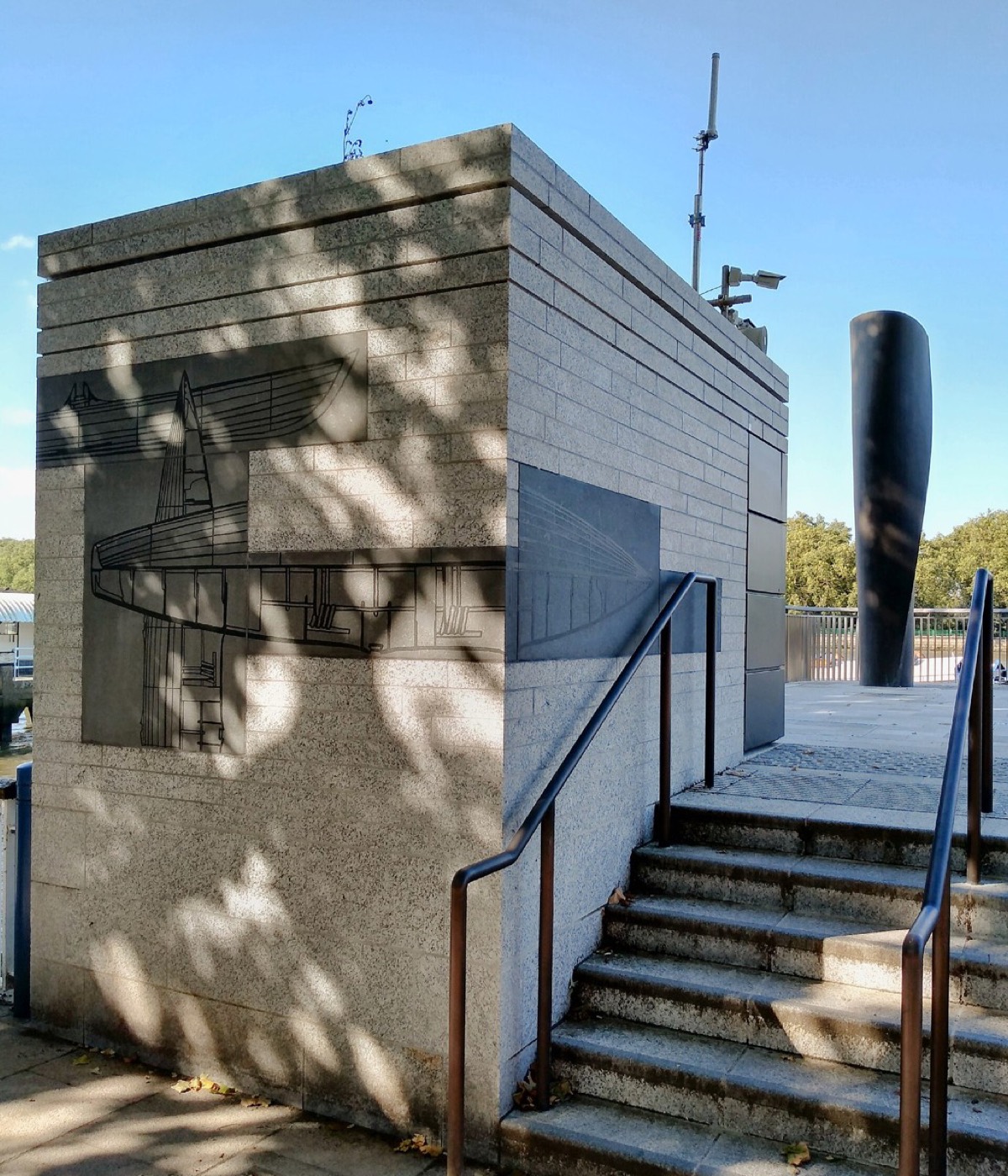
This is part of the Thames Tideway Tunnel, a vast new interceptor sewer running deep beneath London, designed to catch the overflow from dozens of Bazalgette's old CSOs before it reaches the river. It is, in effect, a second Bazalgette-scale project, built a century and a half after the first.
The Tideway Tunnel shows that Britain can still build at that scale when it chooses to.
The open question is whether Britain will choose to build at that scale everywhere else the Victorian pipes still run, or whether the next decade of spill figures looks like the last one. Forwards means fewer dry-day spills and more separated pipe; backwards means more of both, on the same Victorian foundations.
Is Britain's water system moving forwards toward separated, modern drainage, or is privatised underinvestment pushing it backwards, toward more sewage in more rivers? The numbers from twenty twenty-six suggest the answer, for now, is backwards. What comes next is still being decided.
Sources and credits
Photo credits (Wikimedia Commons)
- Sir Joseph Bazalgette, civil engineer who built London's intercepting sewer network: Lock & Whitfield / Adam Cuerden, Public domain - https://commons.wikimedia.org/wiki/File%3AJoseph_Bazalgette_by_Lock_%26_Whitfield.jpg
- Memorial to Sir Joseph Bazalgette on the Victoria Embankment, London: Poliphilo, CC0 - https://commons.wikimedia.org/wiki/File%3ABazalgette_memorial.jpg
- Woking Sewage Works, operated by Thames Water, opened 1896: Mertbiol, CC0 - https://commons.wikimedia.org/wiki/File%3AWoking_Sewage_Works%2C_Carters_Lane%2C_Old_Woking%2C_Surrey_1.jpg
- Margaret Thatcher, Prime Minister who privatised England and Wales water utilities in 1989: Rob Bogaerts, CC0 - https://commons.wikimedia.org/wiki/File%3AMargaret_Thatcher_%281983%29.jpg
- Thames Water engineers working in Hyde Park, London: Daderot, CC0 - https://commons.wikimedia.org/wiki/File%3AThames_Water_-_Hyde_Park_-_London%2C_UK_-_DSC06544.jpg
- Paris sewer system (égouts de Paris), 1897: Brichaut, Albert (vers 1901), photographe, CC0 - https://commons.wikimedia.org/wiki/File%3ALes_%C3%A9gouts_de_Paris_%281897%29%2C_PH37307_%282_of_2%29.jpg
- Thames Tideway Tunnel ventilation column and access structure, Putney Embankment, London: AndyScott, CC0 - https://commons.wikimedia.org/wiki/File%3APutney%2C_Thames_Tideway_Tunnel_Embankment.jpg


Primary sources
- LBC, 'Water bosses slammed over surge in toxic sewage dumps', citing Environment Agency data - 7,280 dry-day spills Jan-May 2026 (48/day) vs 8,576 in all of 2025 (23.5/day); company breakdown (Severn Trent 1,403; South West Water 1,299; Yorkshire Water 1,228; Thames Water 1,052).
- CityAM, 'Thames Water's cash crunch intensifies as bailout rumours swirl', and further CityAM/AJ Bell coverage, 2026 - Thames Water debt close to £20bn, collapsed KKR rescue deal, prospect of a Special Administration Regime, ~£4bn 2024 Teneo cost estimate for an 18-month SAR.
- AJ Bell, 'Thames Water rescue in doubt as UK government raises objections', and 'Thames Water's creditor rescue deal should be ditched - group MPs', June 2026 - £10bn creditor rescue plan, Environment Secretary Emma Reynolds' objection and quote.
- Wikipedia, 'Water privatisation in England and Wales', cross-checked against Christian Science Monitor, 'Thatcher's Water Sell-Off Plan Is Proving Costly', 10 Aug 1989 - £7.6bn sale price, £5bn debt write-off, £1.5bn 'green dowry'.
- Professor David Hall, Public Services International Research Unit (PSIRU), University of Greenwich, cited in Left Foot Forward, April 2024 - about £78bn in dividends and £60bn in sector debt since 1989 privatisation.
- Museum of London, 'How Bazalgette built London's first super sewer'; Gresham College lecture notes (Stephen Halliday); Thames Tideway Tunnel project documentation (Wikipedia) - the 1858 Great Stink, Bazalgette's 1859-1875 network (82 miles main tunnels, 1,100+ miles street sewers), and the 57 original combined sewer overflows.
- Benjamin Disraeli, House of Commons, 15 July 1858 - 'a Stygian pool, reeking with ineffable and intolerable horrors', widely reported quote describing the Thames during the Great Stink.
- CTPA.org.uk, 'Defra water white paper published', 20 Jan 2026, and law-firm briefings (Gowling WLG, Clyde & Co, Slaughter and May) - the Independent Water Commission (Cunliffe Review, Jul 2025) and the January 2026 white paper 'A New Vision for Water', which abolishes Ofwat for a single new regulator (name not confirmed in sources read; not asserted on screen).
Not regulated financial advice.