
Desalination: Can We Drink The Ocean?
This video explains how that machine actually works - a membrane fine enough to stop salt, a pump powerful enough to force water through it against its own natural direction, and an energy recovery device that claws back some of the enormous pressure the process needs. It traces the technology back to Sidney Loeb and Srinivasa Sourirajan's 1959 UCLA membrane, proven on real drinking water at Coalinga, California in 1965, and to the Gulf states that boiled seawater by the thermal method for decades before Jeddah's 1978-79 plant proved membrane desalination at scale.
And it covers what happened in September 2026, when a record algae bloom fouled intakes along Israel's coast and knocked five of six desalination plants offline within days - leaving farms and outlying communities without piped water for more than 27 hours, and Tel Aviv cutting beach showers and irrigation, before partial recovery by the end of the month.
The video's real question: did concentrating 80% of a nation's drinking water in six coastal sites free Israel from depending on the weather, or did it just trade one dependency for a narrower one? Israel's answer, a masterplan approved in 2026 to reach 2.3 billion cubic metres of desalinated water a year by 2050 and rehabilitate hundreds of backup boreholes, is only half-built so far - and the video says so.
Educational documentary. Not financial or investment advice.
In these topics
Chapters
- A Country That Ran Out Of Rain
- Salt Out Of Water: How Reverse Osmosis Works
- The Membrane That Made It Cheap
- From Boiling To Filtering: The Gulf's Earlier Path
- Five Plants, One Coastline
- The Price Of Pressure: Desalination's Energy Bill
- Where The Salt Goes
- What Brine Does To The Seabed
- September 2026: The Algae That Stopped The Taps
- 27 Hours Dry: Who Felt It First
- A Single Point Of Failure By Design
- Engineering The Next Drought
Video notes
1. A Country That Ran Out Of Rain
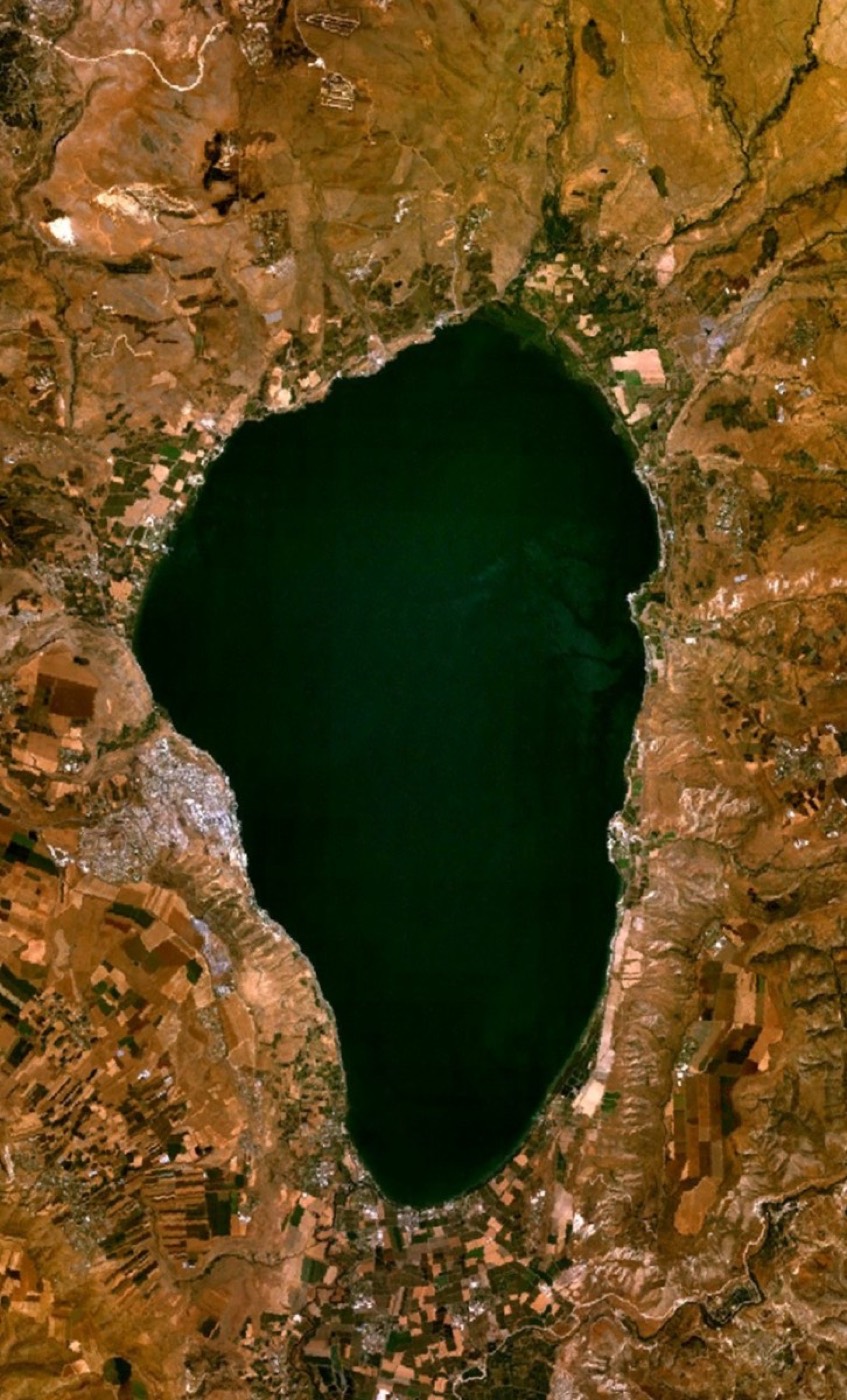
Israel's largest natural reservoir is a lake, fed by rain and snowmelt from the north, called the Sea of Galilee. From 2001 to 2003, a drought pulled that lake down further than anyone in the country had planned for.
This is the Sea of Galilee, the lake at the centre of that drought. It sits in the country's north, and for decades it was the biggest single source of fresh water there was.
The drought did lasting damage before it was over.
In 2001, the lake's level fell so far that scientists gave the danger point a name: the "black line," a level so low it risks permanent harm to the water beneath it. The government answered by cutting water allocations to farmers.
A country cannot run its largest lake down to a warning line and call that a plan. It needed a supply that did not depend on how much rain fell that winter.
The government's answer took years to build, but the direction was set during the drought itself. Israel's first large seawater desalination plant came online in 2005 — the opening move in what this video is actually about.
That decision is why this video exists. To understand what got built, and what it is quietly betting on, we first need the mechanics: how does reverse osmosis actually turn seawater into something you can drink?
2. Salt Out Of Water: How Reverse Osmosis Works
Ordinary filtering lets water through and stops sand, or grit, or anything big enough to see. Reverse osmosis works on a completely different scale: it stops the salt itself, molecule by molecule, using nothing but a membrane and a very large pump.
Seawater is pushed at high pressure through a membrane so fine that water molecules can pass through it, but dissolved salt mostly cannot. What comes out the far side, salt held back, is called permeate — plain language for the fresh water the plant actually sells.
Permeate is only half of what comes out. Everything the membrane held back leaves too, more concentrated than when it went in, and that stream has its own name.
That leftover stream is called brine: seawater with the salt from the fresh water added back into what remains. Every cubic metre of drinking water a plant makes, it also makes roughly a cubic metre of brine, and this video comes back to where that brine goes.
The pump is the single most important part of this system. It pushes seawater against the membrane hard enough to reverse the natural direction of osmosis, which normally moves water toward the saltier side, not away from it.
That pressure is expensive to generate, and the video comes back to that cost once the machine's own history is in place. First, where did this membrane actually come from?
3. The Membrane That Made It Cheap
Reverse osmosis is an old idea in chemistry. Making a membrane thin enough, and strong enough, to do it at any useful scale — that took until two graduate students solved it.
Sidney Loeb and Srinivasa Sourirajan, working at UCLA, produced a workable synthetic membrane from a material called cellulose acetate in 1959, and filed a patent on it in 1960. It was proven on a real town's drinking water for the first time in 1965, in Coalinga, California.
A membrane that works in a laboratory is not the same as a membrane that works on a town's actual water supply. Coalinga's well water was so mineral-heavy it had become nearly undrinkable, and Loeb's refined membrane fixed that.
This is the kind of thin, layered membrane material their invention made possible: dense enough to block salt, thin enough that water could still be pushed through it fast enough to matter. No free photograph of either Loeb or Sourirajan exists, so this video shows the material rather than a portrait of either man.
Coalinga proved the science worked. What came next was scaling it up to something the size of a small city's entire water supply — and that happened somewhere else first, in the Gulf.
4. From Boiling To Filtering: The Gulf's Earlier Path
Loeb and Sourirajan's membrane existed by the mid-nineteen-sixties. It took over a decade more before anyone built a reverse-osmosis plant large enough to supply a city from the sea. Until then, the Gulf solved the same problem a different way: by boiling.
Kuwait and Qatar built some of the world's first large desalination plants in the nineteen-fifties, using a thermal method called multi-stage flash, which boils seawater in stages and collects the steam as fresh water. It works, but it burns a great deal of fuel to do it.
Membrane desalination only caught up at real scale in Jeddah, Saudi Arabia — built in 1978, and running by January 1979. It was the world's first large seawater reverse-osmosis plant, producing twelve thousand cubic metres of fresh water a day.
Three places carried this story: Kuwait and Qatar, where boiling came first, and Jeddah, where filtering finally proved itself at scale. Membrane reverse osmosis had arrived as a genuine alternative to burning fuel.
From Jeddah onward, the same idea kept spreading — and it spread fastest into exactly the kind of country that needed it most: dry, coastal, and out of other options.
5. Five Plants, One Coastline
Between 2005 and 2015, Israel built four more of these plants along the same coastline, and the country's water supply changed completely as a result.
Ashkelon opened in 2005. Palmachim followed in 2007. Hadera opened in 2009. Sorek opened in 2013. Ashdod completed the set in 2015.
All five plants sit on Israel's Mediterranean coastline, from Ashkelon in the south up past Ashdod, Sorek and Palmachim, to Hadera in the north.
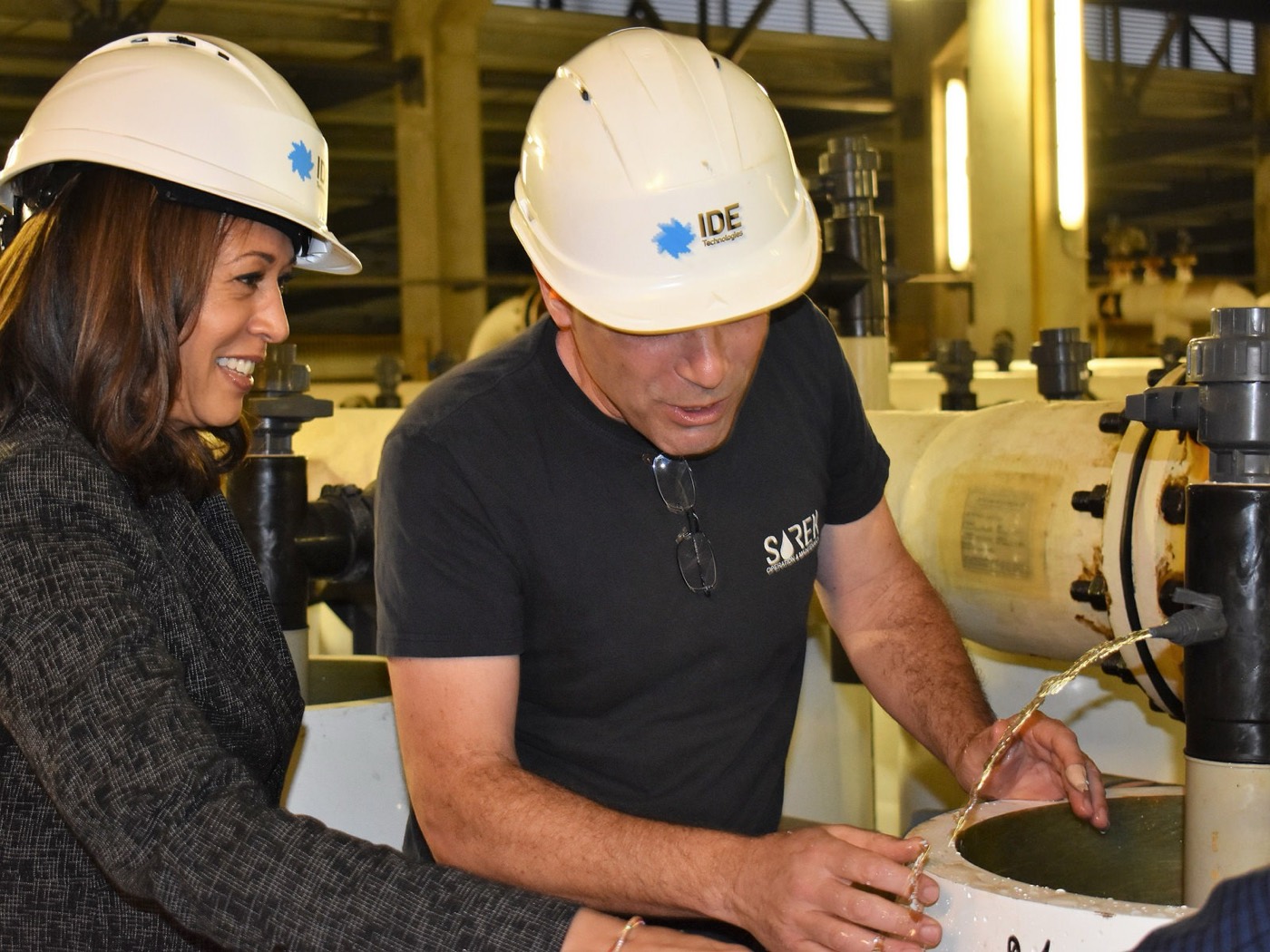
This is Sorek, near Rishon LeZion — among the largest seawater reverse-osmosis plants built anywhere, and the newest of the five when it opened.
At the start of this story, essentially none of Israel's drinking water came from the sea.
By 2026, desalination supplies roughly eighty to eighty-five per cent of the water Israel's taps carry. That share simply did not exist before the first plant opened in 2005.
Five plants, one coastline, and most of a nation's water resting on them. That concentration is not a flaw anyone hid — it is the design this video keeps returning to. Before we get to what that design cost the country in September 2026, we need two more pieces: the energy this all takes, and where the leftover salt goes.
6. The Price Of Pressure: Desalination's Energy Bill
None of this is free. Forcing seawater through a membrane fine enough to stop salt takes far more energy than simply drawing water from a river.
A modern reverse-osmosis plant typically uses around three to four kilowatt-hours of electricity for every cubic metre it makes. Older multi-stage-flash plants, the kind built in the Gulf before membranes took over, typically use ten to fifteen kilowatt-hours or more for the same amount of water.
That gap is the main reason the Gulf itself eventually moved toward membrane reverse osmosis. Membrane plants became that much cheaper largely because of one piece of engineering: recovering pressure that would otherwise be wasted.
An energy recovery device sits between the membrane and the pump. It captures pressure still carried by the outgoing brine and uses it to help pressurise the next batch of incoming seawater, instead of throwing that pressure away.
That single loop is why modern desalination is affordable enough to run a country's water supply on, rather than kept as an emergency backup. It does not make the brine itself disappear — and where that brine goes is where we turn next.
7. Where The Salt Goes
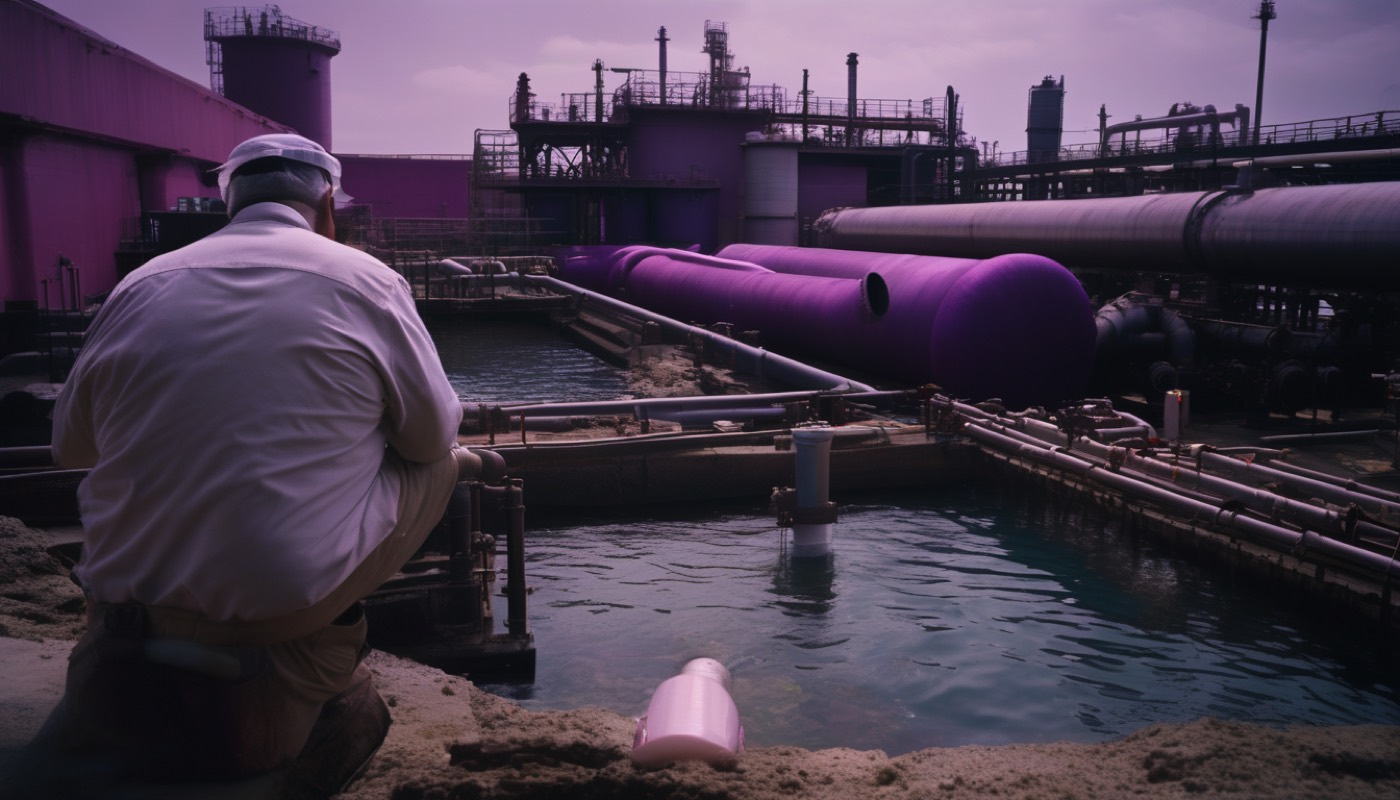
Fresh water is not the only thing a desalination plant produces. For every cubic metre of drinking water it makes, it also makes roughly a cubic metre of leftover brine — seawater with far less of its water left in it.
The intake draws seawater in, the membrane splits it, and the reject stream, the brine, runs back out through a separate pipe, usually close to where the intake sits.
That brine has to go somewhere, and the sea it came from is almost always where it goes.
Most plants discharge their brine straight back into the sea, near their own intake, through an outfall pipe built for exactly that purpose. It is the simplest option, and also the one with the most left to explain.
What actually happens once that brine reaches the sea is not simple at all — and that is the subject of the next chapter.
8. What Brine Does To The Seabed
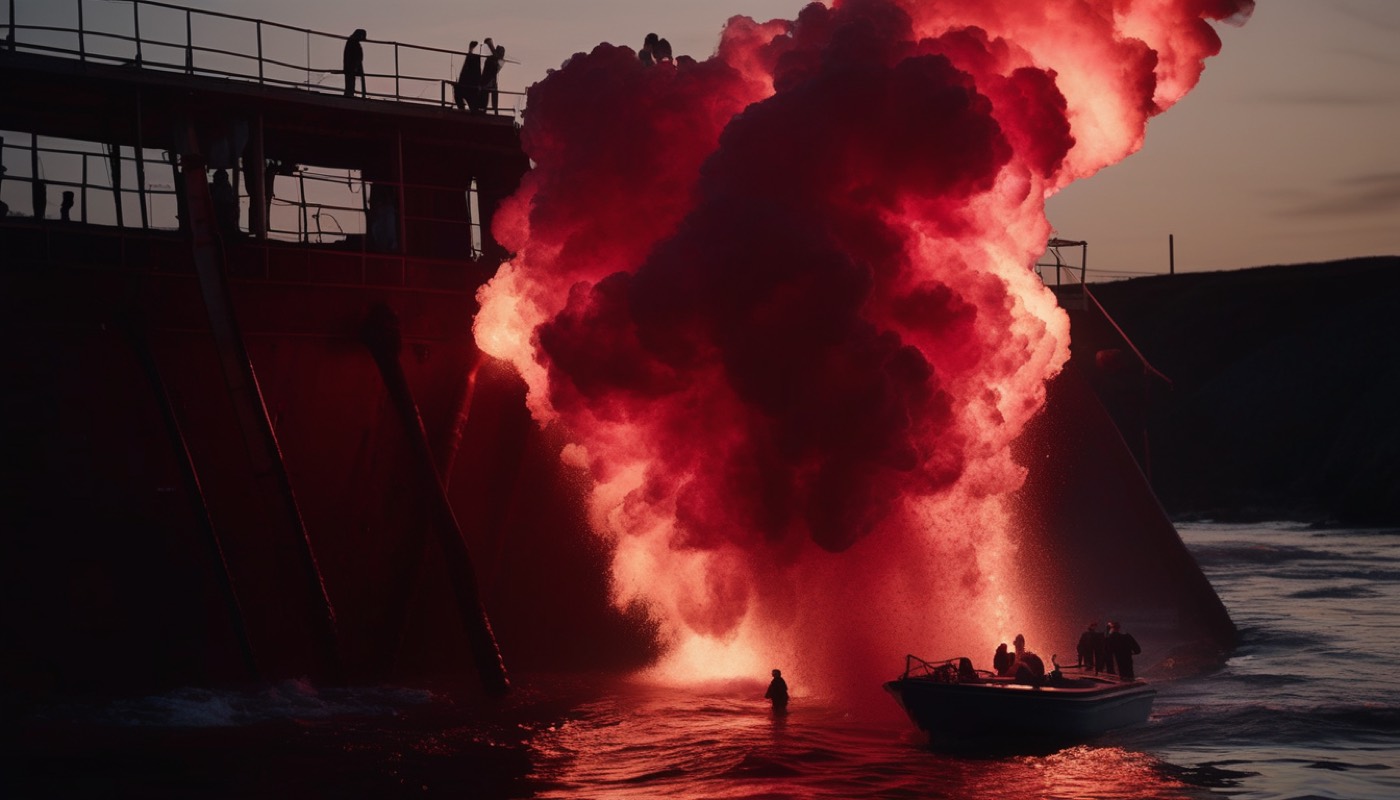
Brine is not just salty water — it is dense. Denser than the sea around it, which means it does not simply mix in and disappear the way fresh water would.
Left undiluted, brine can reach roughly double the salinity of the seawater around it. Because it is heavier, it sinks, forming a distinct, saltier layer that settles along the seabed near the outfall rather than mixing upward.
That sinking layer does not stay still. It spreads.
Measurable effects from an outfall's brine plume can extend hundreds of metres across the seafloor, according to a 2022 review of the evidence. The animals living on that seafloor cannot simply swim away from a change in the water around them.
Bottom-dwelling species vary sharply in how much salt they can tolerate. Worms and crabs cope with a great deal of it. Shrimp, and tiny crustaceans called copepods, cope with far less, and are the first to suffer near an outfall.
None of this makes desalination unusable — brine dilutes with distance and currents, the way anything does. It does mean the sea absorbs a real, physical cost for every cubic metre of fresh water desalination produces, quietly, at the same coastal sites this video keeps returning to.
9. September 2026: The Algae That Stopped The Taps
On the thirty-first of August 2026, something happened to Israel's desalination plants that had never happened before. Not a war, not a cyberattack, not a mechanical failure. Algae.
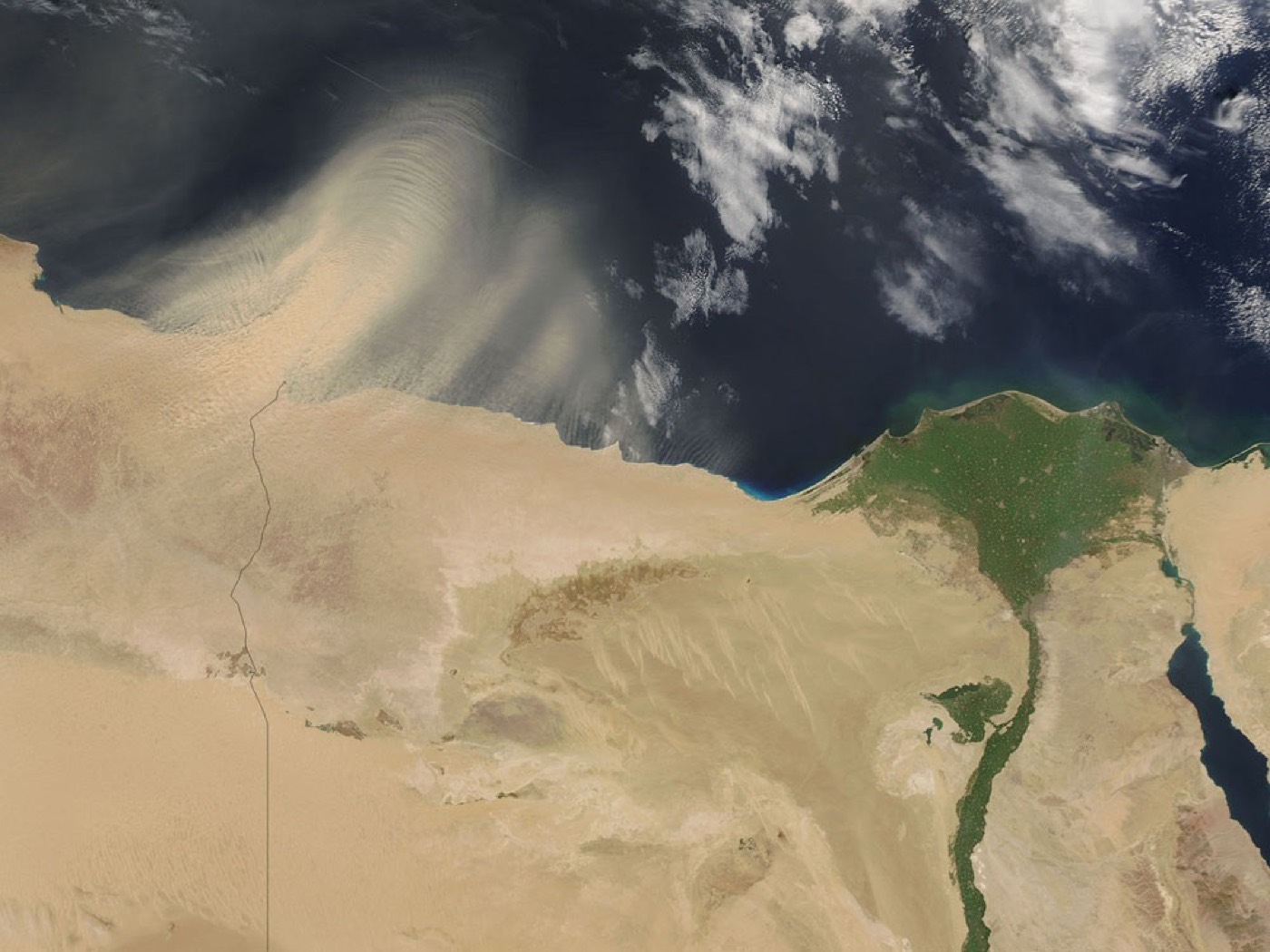
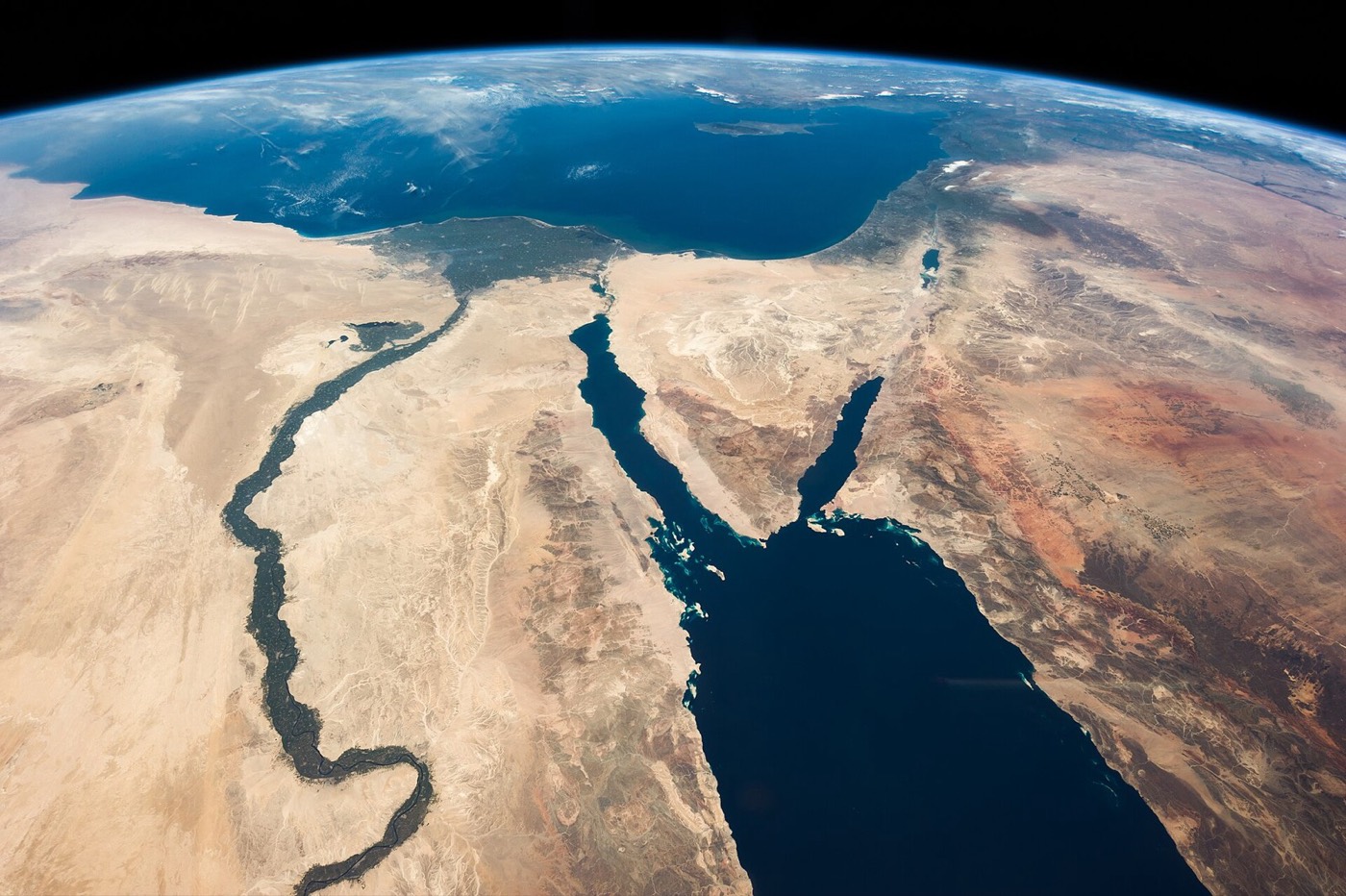
This is the Nile Delta, seen from orbit — the direction the bloom that fouled Israel's intakes is associated with, carried along the eastern Mediterranean.
Within days, five of Israel's six coastal desalination plants had shut down. Only Hadera kept running, and even it was operating under strain.
Mekorot, Israel's national water company, called it "a very unusual combination of factors": a sea storm that stirred up the water, and sea temperatures reaching eighty-six degrees Fahrenheit and above.
And this is the same stretch of coastline from further out — the Nile Delta and the Sinai, with the Mediterranean running north toward Israel, the direction the bloom travelled.
Two places anchor this story. The Nile Delta, in Egypt, is where the bloom is associated with, and Israel's Mediterranean coast is where it caused the shutdown.
Mekorot's own spokesperson put the scale of it plainly.
"An event of this kind has never occurred before in Israel... it was an extremely rare event," said Lior Gutman, a Mekorot spokesperson, in September 2026.
Researchers are still not certain exactly why this particular bloom grew so large. One pointed to sewage pollution from Gaza as a possible contributing factor, though the cause remains under investigation.
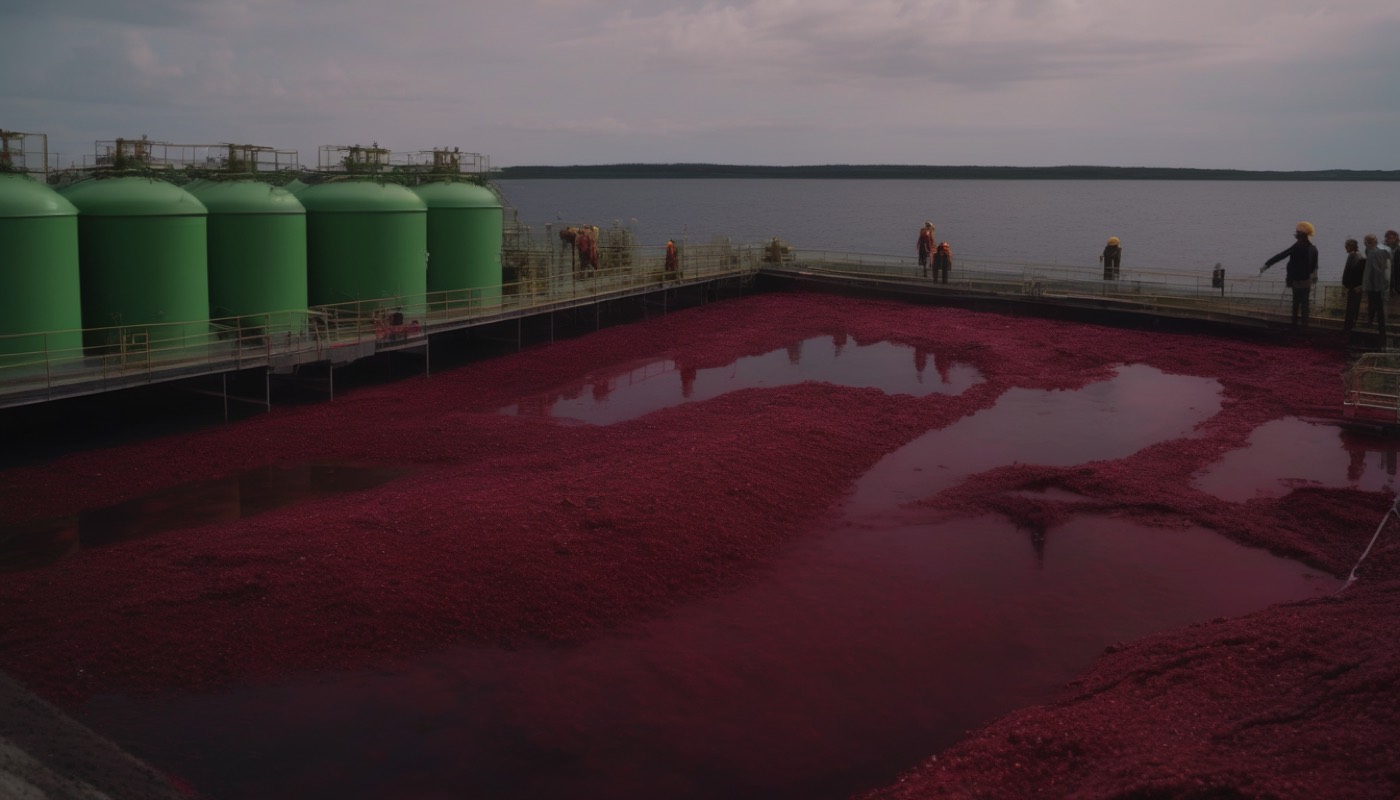
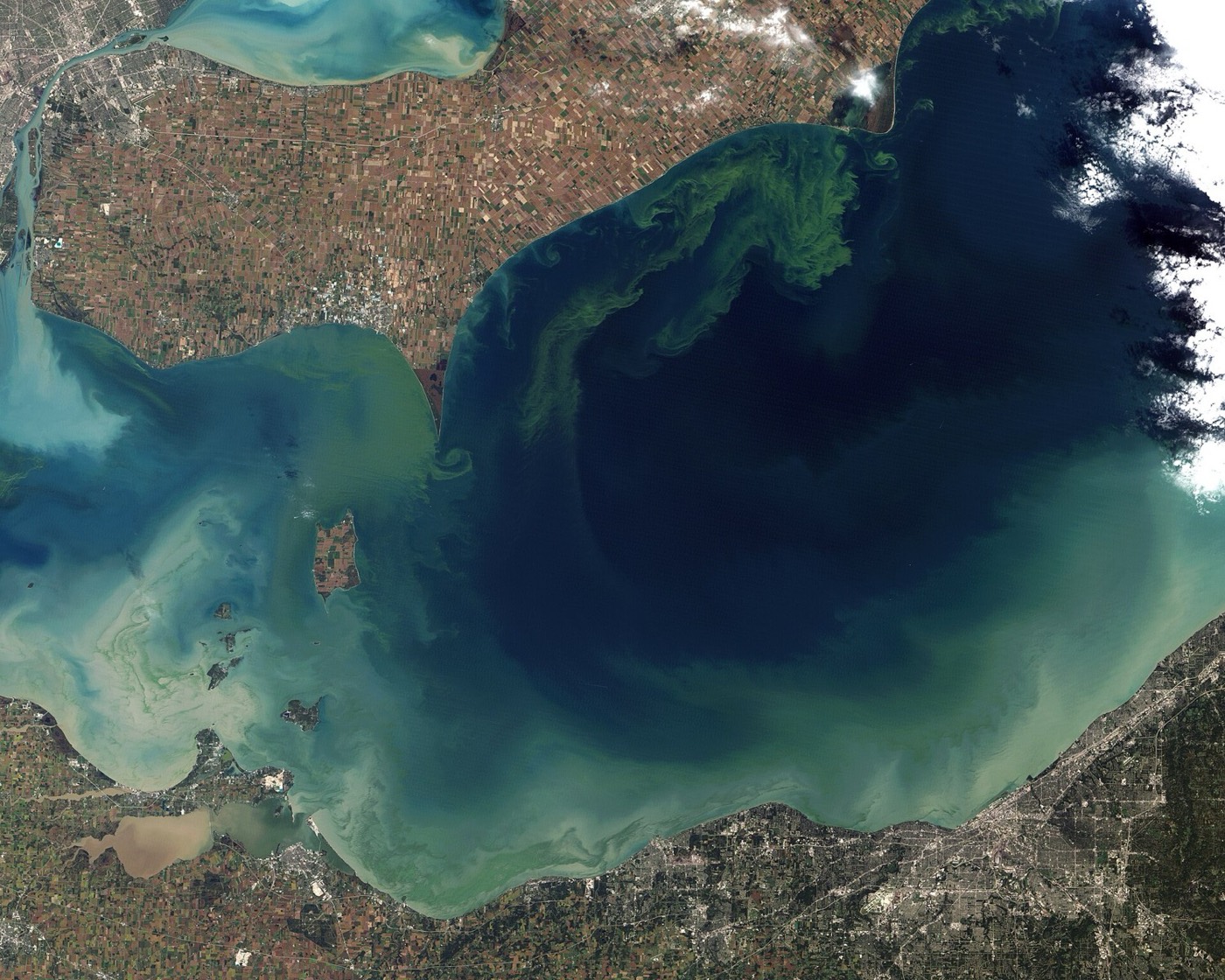
This is what an algae bloom looks like from orbit. It is not the actual 2026 Mediterranean event, which has no free photograph available. It is a genuine satellite image of a different bloom, shown here to illustrate the scale these events can reach.
By the end of September, the water had mostly cleared, though the machines had not.
Algae levels along Israel's coast fell sharply by the twenty-eighth of September, but the plants remained only partially restored, running at reduced output rather than full capacity.
A crisis measured in algae rather than machinery still shuts down machinery just as completely. What that shutdown meant for the people relying on that water is where we go next.
10. 27 Hours Dry: Who Felt It First

The shutdown did not hit every household the same way. Farms and outlying communities felt it first, and felt it hardest.
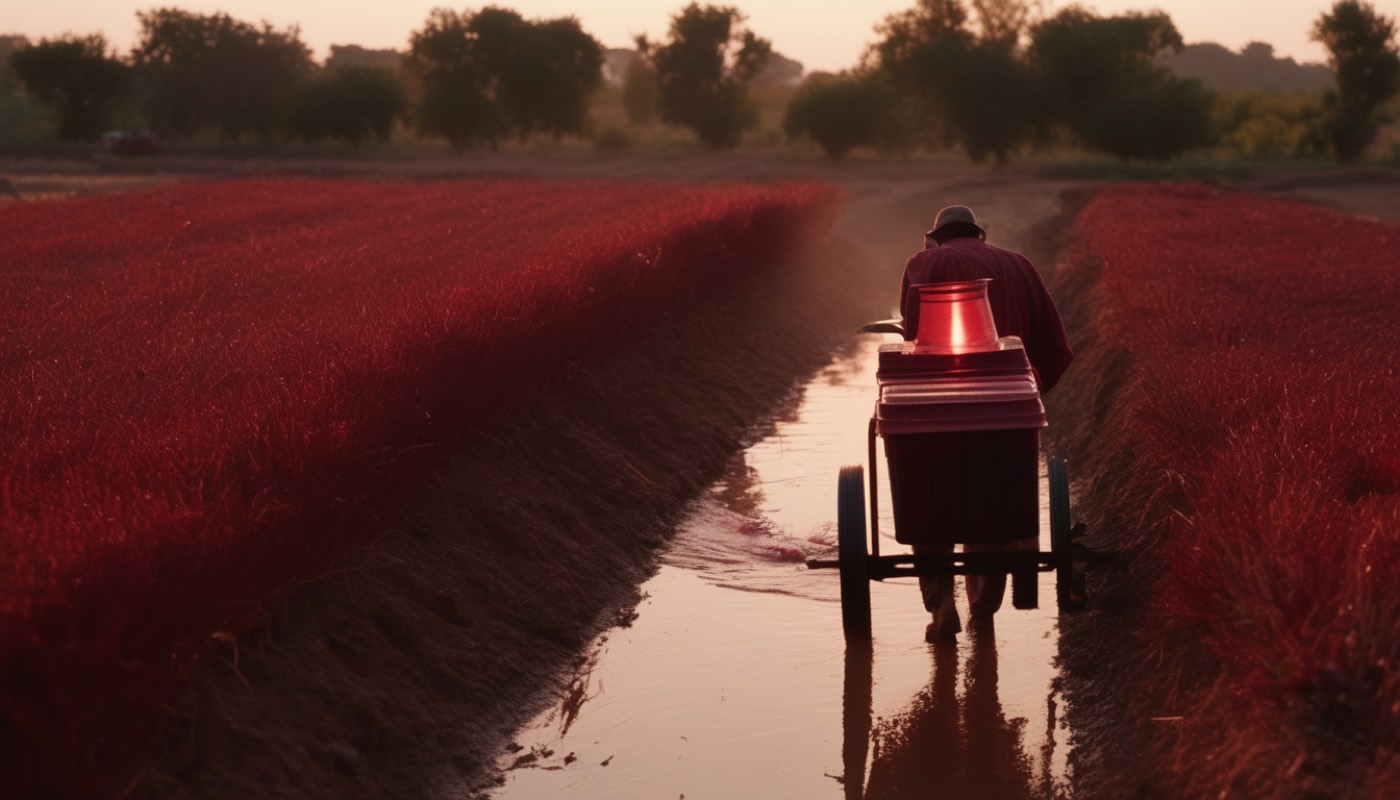
This is the Negev, where much of Israel's irrigated farmland sits — land that depends on a steady water supply arriving on schedule, every day, without exception.
One farmer, Shai Swissa, at Kadesh Barnea in the northern Negev, went without piped water for more than twenty-seven hours. Hundreds of her animals had no water at all during that time.
Swissa described what that meant in practice.
"Without access to water, we have to transport water to workers in the field in bags," said Shai Swissa, a farmer at Kadesh Barnea, in September 2026.
The disruption reached the country's biggest city too, in a smaller but still visible way.
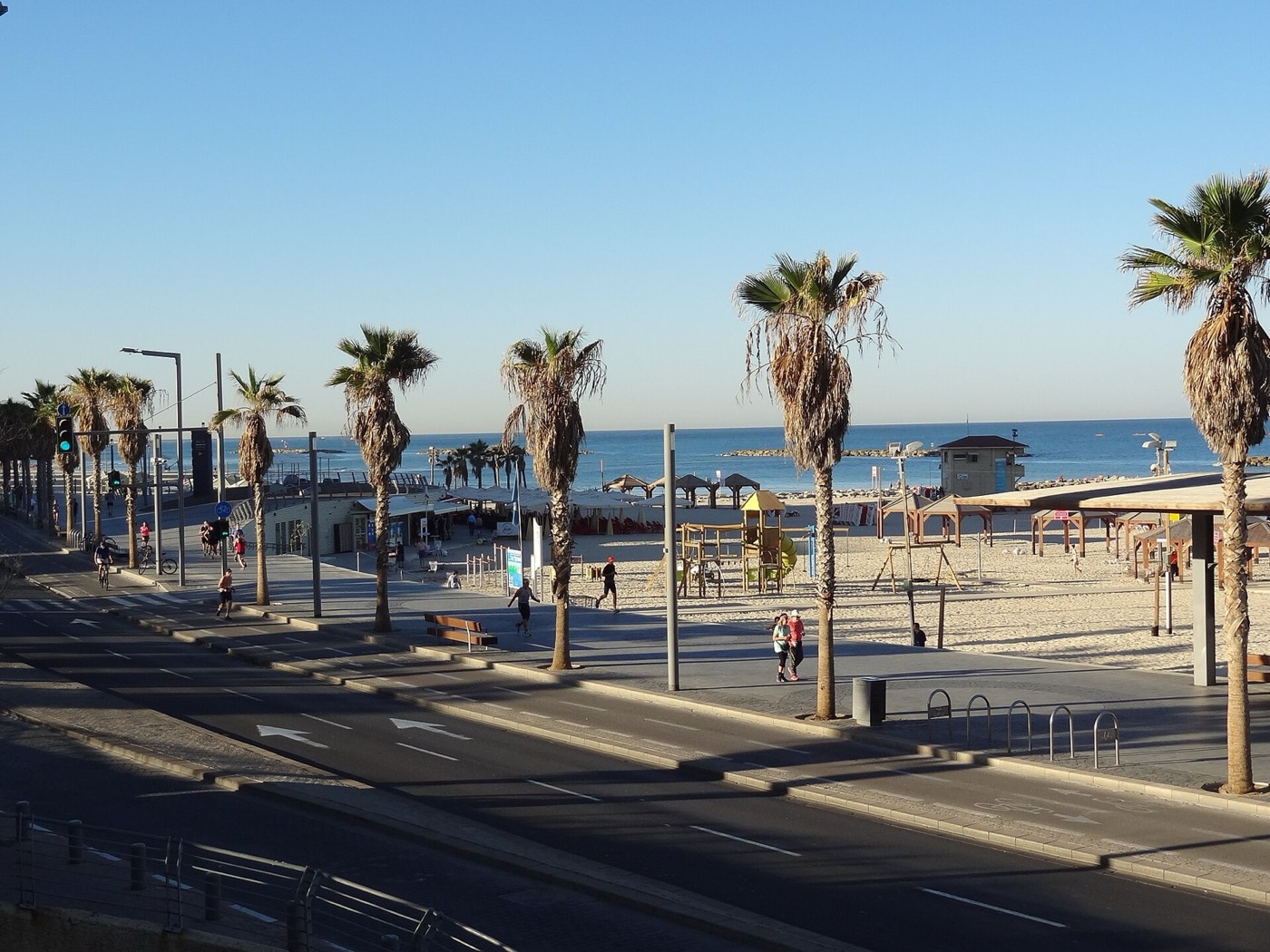
This is Tel Aviv's beach promenade. During the shutdown, the city cut nonessential water use, including beach showers and irrigation — a step officials called extremely rare.
Twenty-seven hours without water is not a catastrophe on the scale of a war or a famine. It is, however, exactly what a system with almost no slack looks like when its main supply stops — which is the argument the next chapter makes directly.
11. A Single Point Of Failure By Design

Step back from the algae itself and look at what actually failed. It was not one plant. It was the design decision that put most of a country's water behind a small, shared kind of intake.
Concentrating eighty to eighty-five per cent of a nation's water in six coastal sites removes one risk: an unreliable sky. It replaces that risk with a narrower one — shared intakes, shared coastline, one kind of event able to reach all of them at once.
That is not a flaw nobody saw. It is the trade the whole system quietly made.
"Desalination is supposed to complement, not replace, natural sources," said Prof. Dror Avisar, of Tel Aviv University, after the shutdown.
Weather risk and infrastructure risk are not the same shape of danger, and that difference is exactly the point.
A drought builds over months and gives a government time to ration and plan. An algae bloom can foul five plants in days, with no equivalent warning — a faster, narrower kind of failure than the one desalination was built to escape.
"Decades of reliance on desalination have led to a false confidence. This is a wake-up call," said Clive Lipchin, of the Arava Institute, after the shutdown.
Replacing rain-dependence with machine-dependence was progress. Replacing it with machine-dependence at six shared sites was a narrower kind of progress than it looked like at the time.
12. Engineering The Next Drought
The country is not backing away from desalination after the September shutdown. It is doubling down on it, while also finally building the backup it never had.
The government has approved a plan to reach 2.3 billion cubic metres of desalinated water a year by 2050. A further target follows for 2075: 2.75 billion cubic metres a year.
More capacity alone does not fix a shared-intake problem; it just makes the shared intakes bigger. The same plan also addresses that directly.
The plan proposes rehabilitating four hundred inland boreholes, with two hundred more to follow. That backup is meant to cover roughly eighty per cent of supply if the coastal plants ever shut down again.
On paper, that backup already exists as a plan. In practice, building it has moved slowly.
"You have to ask whether Israel is doing enough to ensure that it has a backup plan... and the answer is not really," said David Katz, of the University of Haifa.
So the honest answer to this video's own question sits in the gap between the plan and what has actually been built.
A bigger, more concentrated desalination system is not a mistake. Boreholes rehabilitated on paper are not boreholes rehabilitated in the ground. Both statements are true of the country's water supply at the same time.
Desalination did what it promised: it freed a dry country from depending on the sky. What the algae shutdown showed is that freeing a country from one dependency, without also spreading the risk of the next one, only moves the single point of failure. It does not remove it.
Sources and credits
Photo credits (Wikimedia Commons)
- Sea of Galilee (Lake Tiberias), Israel: unknown, Public domain - https://commons.wikimedia.org/wiki/File%3ASea_of_Galilee.jpg
- Sorek desalination plant, Rishon LeZion, Israel: Office of Senator Kamala Harris, Public domain - https://commons.wikimedia.org/wiki/File%3AKamala_Harris_at_the_Sorek_Desalination_Plant_in_Rishon_Lezion%2C_Israel_24830054958_bcc85e4624_h.jpg
- Nile Delta, Egypt (NASA/USGS satellite view): National Aeronautics and Space Administration (NASA), Public domain - https://commons.wikimedia.org/wiki/File%3ASatellite_picture_of_the_Nile_Delta%2C_Egypt.jpg
- Nile Delta and Sinai from orbit (ISS wide-angle view): Expedition 35 Crew Image courtesy of the NASA Johnson Space Center, Image Science & Analysis Laboratory Derivative work including grading, noise reduction, lens, Public domain - https://commons.wikimedia.org/wiki/File%3AISS035-E-007148_Nile_-_Sinai_-_Dead_Sea_-_Wide_Angle_View.jpg
- Satellite ocean-colour image of an algae bloom (illustrative example, NOAA/NASA Lake Erie imagery - not the September 2026 Israel bloom itself): Jesse Allen and Robert Simmon, Public domain - https://commons.wikimedia.org/wiki/File%3AToxic_Algae_Bloom_in_Lake_Erie.jpg
- Negev desert agriculture and irrigated fields, Israel: Unknown, Public domain - https://commons.wikimedia.org/wiki/File%3A125834_negev_agriculture_and_fields_PikiWiki_Israel.jpg
- Tel Aviv beach promenade, Israel: Simon Cobb, CC0 - https://commons.wikimedia.org/wiki/File%3ATel_Aviv_Promenade.jpg


Primary sources
- International Arid Lands Consortium (Arizona), 'An Overview of the Role of Desalination in Israel's Water Supply Portfolio', re- - the 2001-2003 drought and 'black line' low point, the 2005 first plant, and the 80-85% current potable-water share.
- Wikipedia, 'Sidney Loeb', re-, corroborated by ScienceDirect's 'A tribute to Sidney Loeb' - the 1959 membrane, 1960 patent filing, and 1965 Coalinga, California demonstration.
- ScienceDirect (Desalination journal), 'The world's first large seawater reverse osmosis desalination plant, at Jeddah, Kingdom of Saudi Arabia', and 'Performance of the 12,000 m3/d seawater reverse osmosis desalination plant at Jeddah' - the 12,000 m3/day capacity, built 1978, on-line January 1979.
- MDPI (Applied Sciences), 'A Review of the Water Desalination Technologies' (2021) - multi-stage-flash thermal desalination in 1950s Kuwait and Qatar, and typical SWRO/MSF energy-per-cubic-metre figures used in chapter 6.
- Haaretz, 'Five of Israel's Six Desalination Plants Shut as Algae Hits Mediterranean Coast', 1 Sep 2026, and 'Algae Levels Drop Along Israel's Coast as Desalination Plants Remain Partially Shut', 28 Sep 2026 - the shutdown's scale and the latest-available recovery status.
- CNN, 'Miles-long microalgae bloom knocks out most of Israel's desalination plants', 4 Sep 2026 - Mekorot's 'a very unusual combination of factors' and the quote from spokesperson Lior Gutman.
- The Times of Israel, 'Desalination plants again shut down due to murky seawater; farmers sound the alarm', 1 Sep 2026 - farmer Shai Swissa's 27-hour water outage and quote.
- NBC News, 'Massive algae bloom exposes fragility of Israel's advanced water system', Sep 2026 - Tel Aviv's beach-shower and irrigation restrictions.
- The Times of Israel, 'New masterplan needed after desalination shutdown underlines dangers of tech overreliance', re- - the 2.3bn m3/yr-by-2050 and 2.75bn m3/yr-by-2075 targets, the 400+200 borehole plan, the actual rehabilitation shortfall, and quotes from Prof. Dror Avisar, Clive Lipchin and David Katz.
Not regulated financial advice.